Buying or selling a used vehicle is easier when you know what the car is actually worth. Still, many people rely on guesses, outdated listings, or rough estimates. That can be risky, since prices shift quickly and small details can change a vehicle’s value more than expected.
If you’ve ever asked yourself “how much is my car worth?”, you’re not alone. Millions of buyers and sellers check used car values every month using online tools. The real challenge is knowing which numbers to trust and how to use them.
This guide explains how car market value calculators work, what affects pricing the most, and how to use car value estimates with confidence.
If you want to check a vehicle’s current market value right away, you can use the form below.
Key Takeaways Before You Check Your Car’s Value
- There is no single fixed price for any vehicle. Car values depend on condition, location, and market demand.
- Online valuation tools provide estimates, not guarantees. Comparing multiple car value calculator results is smart.
- A vehicle’s history, mileage, and timing can change its value more than most people realize.
Why Knowing a Car's Market Value Matters
Understanding the worth of any car holds immense significance for both buyers and sellers alike. It informs various decision-making processes related to buying, selling, or trading in a vehicle.
For Buyers
For buyers, knowing a car’s value helps give a realistic expectation of what a fair price should be for a particular make, model, and condition of a vehicle. With this piece of information, buyers can negotiate more effectively with sellers, ensuring they don’t overpay for a car that may be priced above its actual worth.
No one wants to overpay for a vehicle and I’m sure you don’t. Another reason you need to check the market value of a car is to verify if a vehicle fits within your budget.
For Sellers and Dealers
On the other hand, for sellers, knowing the vehicle’s value is equally crucial. It allows them to set an appropriate asking price for their vehicle when listing it for sale. Pricing a car too high can chase away potential buyers and you don’t want that, while pricing it too low may result in lost profit.
By getting the accurate car worth, sellers can attract more interest from potential buyers and increase their chances of securing a favorable sale. Moreover, getting a car appraisal enables sellers to negotiate confidently with prospective buyers, ensuring they receive a fair offer for their vehicle.
How Much Is My Car Worth Right Now?
This is the question most people care about, and the answer is not always simple.
Why There Is No Single “Correct” Car Value
Even identical vehicles can sell for different prices. That surprises a lot of people.
Market Supply and Demand
If a specific model is in high demand and short supply, prices rise. When the market is flooded, prices soften.
Location and Regional Pricing
A pickup truck may be worth more in rural states than in urban areas. Convertibles tend to sell better in warm climates. Location matters more than people think.
Seasonal Pricing Shifts
Seasonality affects used car values. SUVs and all-wheel-drive vehicles often rise in winter. Convertibles and sports cars usually perform better in spring and summer.
How Online Car Value Calculators Work
A car value calculator pulls together large amounts of vehicle and market data to estimate what a car is worth today. These tools are fast, convenient, and widely used.
What Goes Into a Car Value Estimator?
A car value estimate doesn’t come from a single number or a quick guess. Behind the scenes, a car value estimator pulls together several data points to figure out what a vehicle is realistically worth in the current market. Some factors are:
VIN and Vehicle Data
A VIN reveals the car’s factory specifications, trim level, engine, and drivetrain. This ensures the estimate matches the exact vehicle.
Mileage Thresholds
Mileage has a predictable impact on value. Vehicles crossing major mileage milestones often experience noticeable drops.
Condition Grading
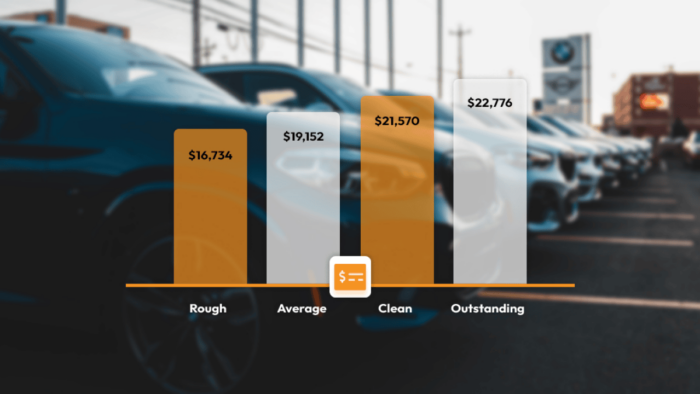
Condition ratings usually range from poor to excellent. Small cosmetic or mechanical issues can shift prices significantly.
Recent Sales Data
The best vehicle value calculator tools rely on recent transactions rather than outdated book values.
Calculating Used Car Value: Factors Affecting Car Market Value
Several factors affect the value of any vehicle. Some of the most important to consider are:
- Mileage: Lower mileage generally means higher value due to reduced wear and tear and perceived higher reliability.
- Age: Newer cars command higher costs as they have had less depreciation and little to no wear and tear.
- Condition: Well-maintained cars with minimal exterior and interior damage and good mechanical condition have a higher value.
- Location: Market demand and pricing trends vary by state or region, affecting the value locally.
- Maintenance History: A vehicle with a proper record of regular maintenance indicates care and reliability, increasing a car’s worth.
So, do you want to find out the trade-in, private party, or retail value of a vehicle? In the next section, we will analyze all three and give you a better understanding of their differences.
READ ALSO: What Is Car Market Value | How To Get The Fair Value?
Trade-In Value vs Private Party Value vs Dealer Retail Value
Not all car values serve the same purpose. Understanding the differences helps you set realistic expectations.
Value Type | Definition | Typical Amount | Purpose |
Trade-In Value | What a dealership offers toward another purchase | Lowest | Convenience and tax benefits |
Private Party Value | Selling directly to another individual | Higher than trade in | Maximizes seller return |
Dealer Retail Value | Price listed on a dealer lot | Highest | Covers reconditioning and profit |
Why These Values Are Always Different
Seeing different prices for the same car can feel confusing, but each value serves a different purpose. Who’s buying the car, how it will be sold, and the level of risk involved all play a role in why the numbers don’t match.
Dealer Profit Margins
Dealers factor in inspection, reconditioning, overhead costs, and profit when pricing a vehicle for resale, which is why retail values are usually higher.
Convenience vs Maximum Return
Trade-ins are fast and simple, while private sales often bring more money but require more time and effort from the seller.
Is It Better to Trade In My Car or Sell It Myself?
Deciding whether or not to trade in your car or sell it to buyers in the car market depends on a few factors, including your convenience and priorities.
For example, trading in a car is more convenient and less time-consuming than selling it yourself. You can complete the transaction in one visit to the dealership, avoiding the trouble of advertising, negotiating with potential buyers, and handling paperwork.
It could also come with a few tax benefits. When you trade in your car, the car trade-in value can be subtracted from the purchase price of a new vehicle, potentially reducing the sales tax you owe on the new purchase.
Remember, however, that you may not get the best returns with a trade-in compared to selling it yourself. When you sell directly to buyers, you have full control over the price of the car or vehicle and the process.
Using an Online Car Market Value Calculator for Used and New Cars
Used car market value calculators are easy to use. As soon as you find the right one, all you need to do is enter the VIN, license plate number, year, make, and other required information and submit it. You will then receive the worth of the vehicle you are interested in.
The top online car fair market value calculators are
Find Used Online
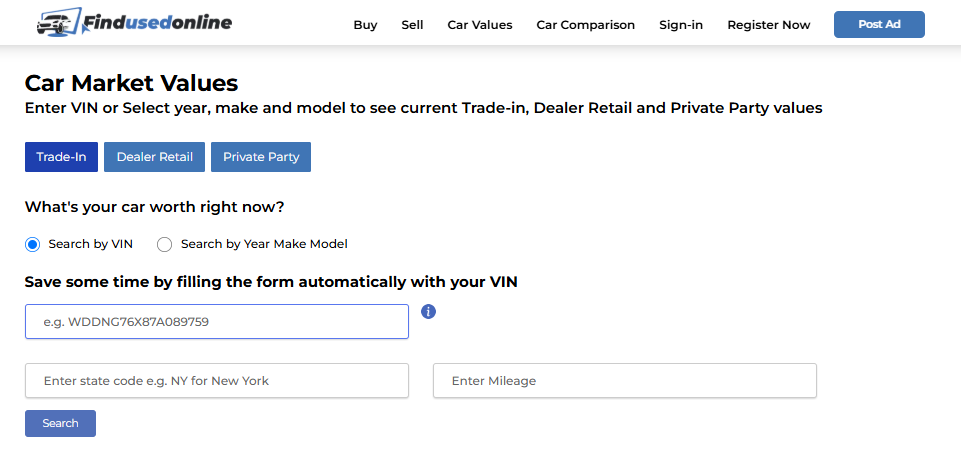
Findusedonline.com is a car classifieds site that provides a very easy-to-use car market value calculator. With the year, make, model, mileage, and condition of vehicles, their tool provides all three value types – trade-in, private party, and dealer retail.
Consumer Reports
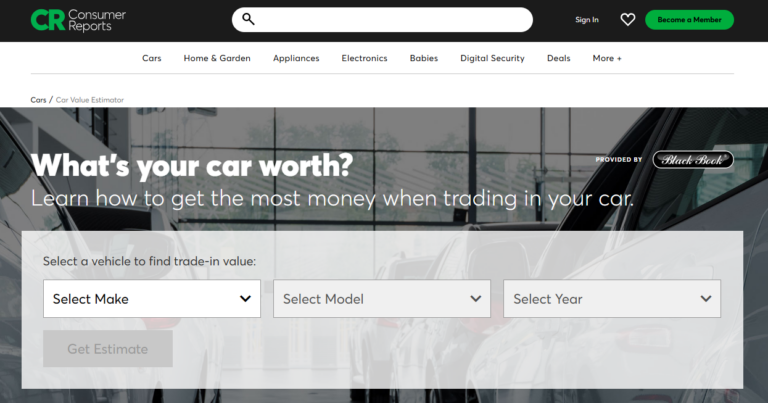
This tool provides a detailed estimate based on your car’s specific details. It considers factors like year, make, model, trimline, mileage, and vehicle condition. Additionally, it offers expert advice on preparing your car for sale.
Kelley Blue Book® Value
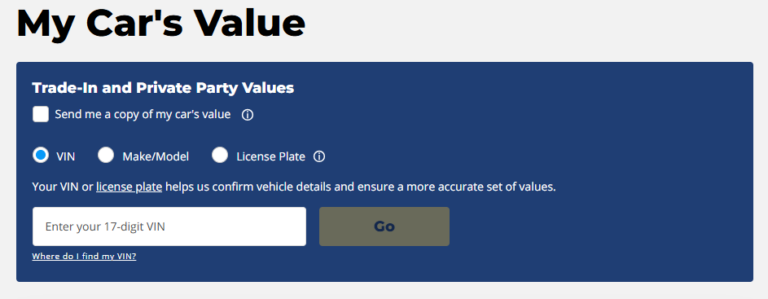
The Kelley Blue Book calculator has a simple interface. You can select your car’s features and get an estimate. It calculates the book value of your car, which is useful for understanding its worth.
Edmunds True Market Value® Tool
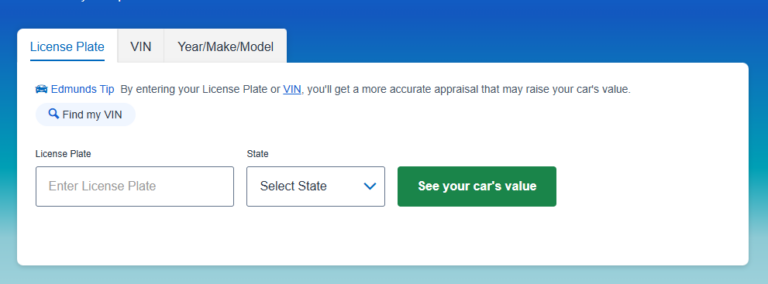
If you’re looking for instant estimates, this tool is handy. It provides both trade-in and private party and resale value estimates. Whether you’re planning a trade-in or a private sale, Edmunds can help.
If you are a buyer interested in checking out the value of your vehicle, you can hurry down to one of the sites listed above. However, if you are a dealer, we have the right tool for your business.
Make Sure Your Car’s Value Is Accurate
Before relying on any estimate, it helps to confirm there are no hidden issues affecting the price. This page offers a free car value check that looks beyond surface details.
You can quickly review:
- Past accidents
- Title problems
- Mileage rollbacks
- Theft records
A free car value check gives you a clearer picture of what the vehicle is really worth, with no guesswork involved.
How to Use Car Value Estimates When Negotiating
This is where valuation tools really matter.
Negotiating with a Dealership
Bring multiple car value estimates. Show comparable prices. Stay calm and informed.
Negotiating Trade In Offers
If a trade in offer feels low, reference recent market data and condition.
Negotiating Private Party Sales
Price your car within the market range. Leave room for negotiation without overshooting.
Set Up an Online Car Market Value Calculator for Your Dealership
Access to accurate trade-in, private party, and dealer retail values allows dealerships to price vehicles quickly and confidently. With a vehicle market value API integrated into your website or mobile app, you can generate listings based on real market data and the actual condition of each vehicle.
Accurate valuations also help dealers provide fair trade-in offers, avoid pricing mistakes, and create a smoother negotiation process. When buyers and sellers see transparent pricing backed by data, trust increases naturally.
Here’s why dealerships benefit from using a used car value calculator:
- Faster and more efficient transactions
- Confident pricing for listings and purchases
- Quicker and more accurate trade-in assessments
- Data-driven appraisals that build customer trust
- A better overall buying and selling experience
Find Used Online Uses Our APIs!
FindUsedOnline is a valuable resource for anyone seeking to determine the market value of used cars. This car classifieds and free appraisal tool gives a user-friendly platform to assess the worth of any vehicle.
By considering the make, model, year, mileage, and condition of vehicles, and including actual transaction data from dealers, FindUsedOnline provides trade-in, private party, and dealer retail values for car sellers, buyers, and dealerships in the automotive industry.
Why does your dealership need to rely on another calculator when you could integrate an API and get yours? Sign up and get 15 free credits to get started!
In essence, understanding the worth of a car is not just about knowing numbers; it’s about making informed decisions that can save buyers, sellers, and dealers time, money, and unnecessary stress.
Frequently Asked Questions About Car Values
What’s the best way to find out what my car is worth?
The best way to find out how much your car is worth is to use a car value calculator that looks at real market data, not just guide prices. Entering accurate details matters, especially mileage and condition. Checking more than one source helps you see a realistic range instead of relying on a single number.
How accurate are online car valuation tools?
Online valuation tools are generally reliable for estimates, but they are not exact sale prices. Results can vary because each tool weighs data differently. Accuracy improves when the information you enter matches the vehicle’s real condition and history.
What factors affect my car’s value the most?
Mileage and overall condition have the biggest impact on used car values. Accident history, local demand, and how well the car has been maintained also play a major role. No single factor decides the price on its own.
How does mileage affect my car’s value?
Mileage affects value because it reflects wear over time. Cars with lower mileage for their age usually hold value better, while higher mileage vehicles depreciate faster, especially after passing major mileage thresholds.
What information do I need for an accurate valuation?
You’ll need the VIN or exact vehicle details, current mileage, condition, and location. Service history can also help, especially when buyers compare similar cars.
Do online car valuations include taxes and fees?
Most online valuation tools do not include taxes, registration, or dealer fees. A used car value calculator usually shows the vehicle price only, so final costs may differ.
How often should I check my car’s value?
Checking your car’s value every few months is reasonable, especially if you plan to sell or trade it in. Market conditions can change faster than many people expect.
How much does accident history reduce my car’s value?
Accident history usually lowers value, even if repairs were done well. The reduction depends on severity, but buyers tend to pay less when a vehicle has reported damage.
Do modifications increase or decrease my car’s worth?
Most modifications lower resale value because they limit the number of interested buyers. Stock vehicles are easier to sell and usually priced more competitively..
What’s the difference between trade-in value and retail value?
Trade-in value reflects what a dealer can offer after accounting for resale costs. Retail value is higher because it includes those costs and dealer profit.
How do I negotiate based on online valuation estimates?
Use valuation estimates as a reference, not a demand. Comparing multiple estimates and understanding your car’s condition puts you in a stronger position during negotiations.