
Check Vehicle Title Status Instantly with Our VIN Title Check API
Verify vehicle title status by VIN in seconds. The Vehicle Title Check API detects salvage records and returns clear title data that dealerships, insurers, and automotive platforms rely on every day.
Why Our Vehicle Title Check API Delivers Better Results
This title check API is designed for businesses that need accurate title information without noise or guesswork. It focuses on what matters most. Clear title status. Clear causes. Clear dates.
Fast Responses
JSON responses in under 1 second for all requests
High Availability
99.99% uptime, built for continuous production use
Wide Manufacturer Coverage
Covers all vehicles with 17-digit VINs listed in North America
Simple Integration
Single GET request using a VIN. No complex parameters
Developer-Friendly Language Support
Compatible with Python, JavaScript, PHP, Java, C#, Ruby & Go
Production Ready
Used in dealership tools, marketplaces, underwriting, and screening workflows
What the VIN Title Check API Does
The vehicle history title API checks whether a vehicle has a salvage record and returns the details tied to that title brand.
In simple terms, you send a VIN. The API tells you:
- Whether the vehicle has a salvage title record
- The cause of the salvage event, such as collision
- The date the salvage status was recorded
This makes it easy to screen vehicles early, flag risky inventory, and protect buyers from costly surprises. The API is commonly used as a first line of defense before deeper history reports or inspections are ordered.
If you only need to know whether a title is clean or branded, this API does that job quickly and accurately.
How Does the Vehicle Title Check API Work?
The VIN Title Check API uses a simple request–response flow designed for production use. Here’s how it works:
Step 1. Submit VIN Request
Send an HTTP GET request with a valid 17-character VIN as a required parameter.
Step 2. Title Status Lookup
The API checks the VIN against title data sources to determine whether a salvage record exists and retrieves any related event details.
Step 3. Receive JSON Response
A structured JSON response is returned with salvage status, cause, and recorded date, ready for direct integration.
No additional processing is required. The API returns normalized title data suitable for automated and high-volume workflows.
Test the VIN Title Check API for Free - No Signup Required!
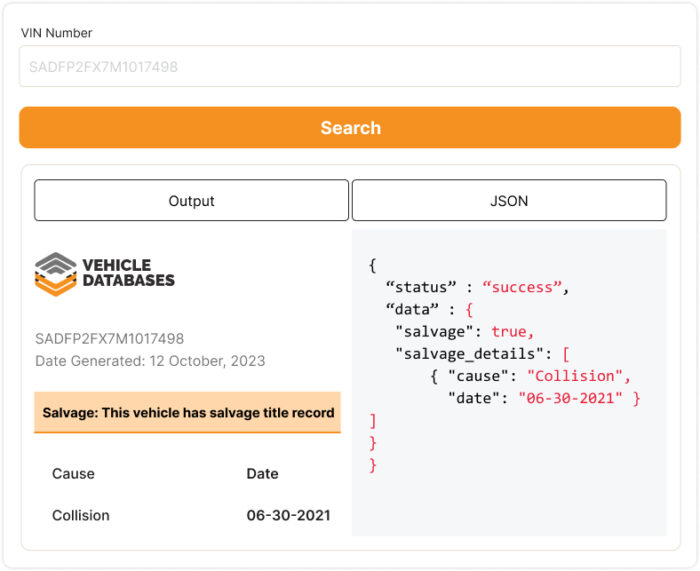
You can test the vehicle title check API directly on this page using a real VIN. Submit a request and view the live JSON response instantly to see how salvage title data is returned. No signup is required to run a basic test.
Get Vehicle Title Data Without API Integration
You can also check vehicle title records directly from the Vehicle Databases dashboard, without connecting the API.
Enter a VIN, and the system will instantly return available title data, including title brands and related records tied to the vehicle. This allows users to verify vehicle title status quickly without building any integration.
Dashboard access is useful for manual checks, internal research, or evaluating the data before implementing the Vehicle Title Check API in your system.
VIN Title Check API Coverage and Support
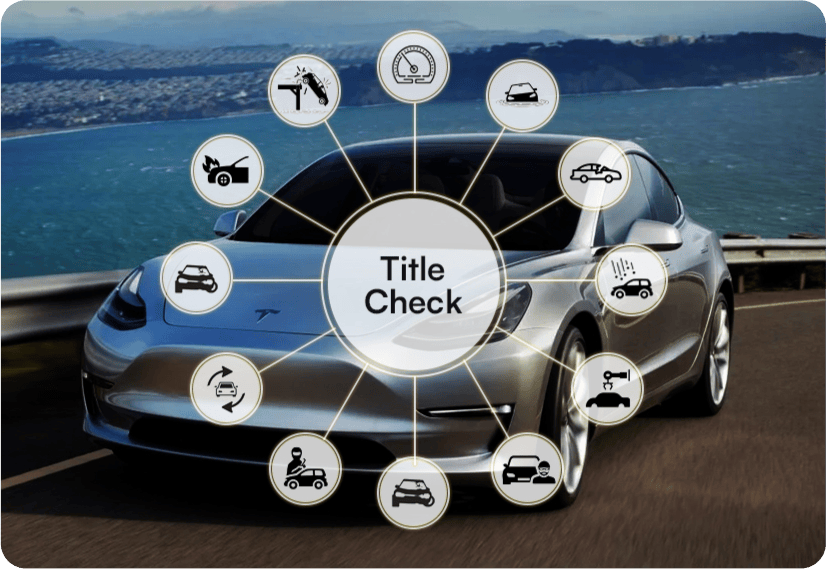
This API supports title checks across a wide range of vehicles and use cases in North America.
Coverage includes:
- All vehicles listed in North America
- US-region VIN standards with full 17-character VIN support
- Passenger cars, trucks, SUVs, vans, and light-duty vehicles
- Vehicles across multiple model years commonly traded in the used market
Operational support:
- Designed for high-volume API usage
- Stable performance for batch inventory checks
- Suitable for instant lookups and scheduled verification jobs
- Consistent response structure for long-term integrations
Sample Title Check API Result
Endpoint:
GET https://api.vehicledatabases.com/title-check/{vin}
This example shows how salvage status, cause, and date are returned in a structured JSON response.
VIN: 5TFDY5F18KX840724
					{
    "status": "success",
    "vin": "5TFDY5F18KX840724",
    "data": {
        "salvage": true,
        "salvage_details": [
            {
                "cause": "Collision",
                "date": "08-22-2023"
            }
        ]
    }
}
Why Title Status Matters More Than You Think
A vehicle’s title affects far more than paperwork. It impacts value, insurability, financing, and buyer confidence.
A missed salvage brand can lead to:
- Overpaying for inventory
- Insurance claim disputes
- Regulatory issues
- Customer complaints and returns
That is why many businesses treat title verification as non-negotiable. A reliable salvage title check API reduces risk before money changes hands.
Types of Car Titles Explained
Vehicle titles indicate how a vehicle has been classified by insurance and state authorities. These types of car titles directly affect value, risk, and resale eligibility.
Clean Title
No total loss reported. The vehicle has no major title branding.
Salvage Title
Issued after a vehicle is declared a total loss due to damage such as collision or flood.
Rebuilt Title
A previously salvaged vehicle that has been repaired and approved for road use.
Flood Title
Indicates water damage, often associated with long-term electrical and mechanical issues.
Junk or Non-Repairable Title
Vehicle is not legal to drive and is intended for parts or scrap only.
Lemon / Buyback Title
Vehicle repurchased by the manufacturer due to repeated defects or unresolved issues.
How the Title Check API Improves Your Business
Title status directly affects pricing, compliance, and risk. A vehicle title check api gives businesses a reliable way to verify salvage records early, before issues reach customers or partners.
Catch Salvage Risk Before It Reaches Inventory
Early title screening prevents high-risk vehicles from entering clean inventory or active listings.
Business Value
- Prevents salvage vehicles from being listed as clean
- Reduces returns and post-sale disputes
- Flags risky vehicles during intake and acquisition
Who Needs It
- Auto dealerships
- Vehicle marketplaces
- Auto auctions
Protect Vehicle Pricing and Margins
Accurate title data ensures vehicles are priced correctly from the start.
Business Value
- Avoids overpricing vehicles with salvage history
- Improves trade-in and wholesale pricing accuracy
- Reduces margin loss from late title discoveries
Who Needs It
- Dealership pricing teams
- Vehicle valuation platforms
- Wholesale operators
Reduce Legal and Disclosure Exposure
Many businesses use title checks as part of their disclosure and compliance workflows, helping ensure accurate vehicle representation at the point of sale.
Business Value
- Helps meet disclosure requirements
- Reduces buyer complaints and chargebacks
- Creates a documented verification step
Who Needs It
- Dealership compliance teams
- Online vehicle marketplaces
- Automotive risk teams
Improve Buyer, Lender, and Partner Trust
Clear title verification increases confidence across all transaction parties.
Business Value
- Builds buyer confidence in listings
- Strengthens lender and insurer relationships
- Signals responsible screening practices
Who Needs It
- Consumer-facing marketplaces
- Dealer groups
- Insurance and finance platforms
Replace Manual Title Checks with Automation
Automated title checks remove delays and reduce human error.
Business Value
- Speeds up intake and listing workflows
- Reduces manual lookup effort
- Improves operational efficiency
Who Needs It
- High-volume dealerships
- Fleet and rental operators
- Automotive software platforms
Scale Title Verification Across Systems
A title check API makes it easy to apply consistent title rules everywhere.
Business Value
- Supports batch VIN checks
- Keeps title verification consistent across locations
- Integrates cleanly into existing systems
Who Needs It
- Multi-location dealer groups
- Enterprise automotive platforms
- Vehicle screening systems
How Instant VIN Reports Uses the VIN Title Check API
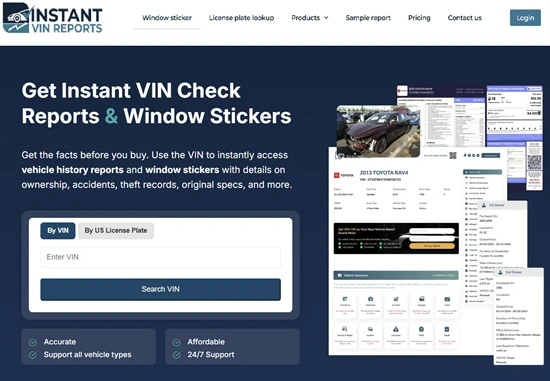
Instant VIN Reports, a vehicle history platform, uses the vehicle title check API to verify title status and detect salvage records by VIN. The API allows them to return clear title indicators instantly as part of their vehicle history reports.
You can view how title status is displayed in their reports using data provided by our vehicle title API. Get started today and integrate the same title verification capability into your own platform.
Pair the Title Check API with Other Vehicle APIs
The title check API works best when combined with other vehicle data APIs to build a complete and reliable vehicle verification workflow. Some APIs you may be interested in are:
Identify the vehicle’s make, model, year, trim, engine specs, transmission, and all specs before checking title status.
Retrieve additional historical records that go beyond title data, including theft records, accidents, liens and loan records, and more.
Review past sale prices , images, and listing history for pricing and market analysis.
Find out the market value of any vehicle. Call the API to receive trade-in, private party, and dealer retail value.
Resolve license plates to VINs when a VIN is not immediately available.
Retrieve the original factory window sticker to verify MSRP, options, packages, and equipment.
Looking for an API built specifically for your business and workflow? Get in touch with us, and we’ll create a custom API designed around your needs.
Trusted by Automotive Platforms That Rely on Accurate Title Data
Automotive businesses use the VIN Title Check API every day to verify title status, reduce risk, and keep their workflows moving. Here’s what teams using the API say about it:


Get Started with the VIN Title Check API
If your platform needs fast, reliable title brand verification, this API is built to support you. You can start testing with free credits and move to higher volumes as your needs grow.
You can also access a downloadable vehicle title database for bulk analysis or offline use.
FAQ About Vehicle Title Check API
What is the API for Salvage title check?
The Salvage title check API is an API that checks the VINs of vehicles to determine if a vehicle has been declared a total loss or has a specific title brand. With title check API, businesses can retrieve title information of vehicles by providing the vehicle identification number (VIN). They can instantly check the title status, including salvage titles, and obtain essential details about a vehicle’s history. Businesses can also provide full vehicle history reports using a detailed vehicle history API.
How do I verify the accuracy of your salvage title VIN Check API?
Vehicle Databases offers 15 credits for free to test in our sandbox environment. This way, you can verify our APIs accuracy through the vehicle information returned, as well as responsiveness, speed, etc.
What businesses can benefit from a VIN title check API?
Various businesses can benefit from a VIN title check API, including dealerships, insurance companies, auto finance companies, and vehicle history report providers. These businesses can leverage the API to assess title status, mitigate risks, and make informed decisions related to vehicle transactions.
Is there an API to check vehicle title status?
Yes, there is an API to check vehicle title status. A vehicle title check API allows you to send a VIN and receive structured data showing whether the vehicle has a salvage record, including the cause and date.
How accurate are vehicle title check APIs?
Vehicle title check APIs are accurate when they rely on trusted title and industry data sources. Accuracy depends on reporting timelines and data updates, but reliable APIs are designed to minimize gaps and inconsistencies.
What title brands can a title check API detect?
A title brand API can detect brands such as salvage and other major title flags depending on data availability. This API focuses on identifying salvage records clearly and consistently.
Does the NMVTIS provide an API for title data?
No, NMVTIS itself does not offer a public direct API for developers. Many vehicle data providers aggregate NMVTIS-style title data and make it accessible through structured APIs.
How much does a vehicle title check API cost?
The cost of a vehicle title API depends on usage volume and access level. We offer free trials followed by tiered pricing for production use.
What's the difference between a title check and a full history report API?
A title check API focuses only on title status, while a full history report API includes ownership changes, accidents, sales records, and more. Many businesses use both together.
Are title check APIs updated in real time?
Title data is updated as new records are reported. While not always real-time, updates are frequent enough for operational and compliance use.
How do I integrate title check data into my dealership software?
To integrate title check data, you need to sign up to get your API key, send the VIN to the endpoint, and map the JSON response into your inventory or CRM system. You can reach out to support if you have any questions, and we will guide you through.
What information is needed to perform a title check via API?
A VIN is required to perform a title check. Our checks use a full 17-character VIN for the best results.
How long does it take for a title brand like salvage to appear in the API data?
The time it takes for a salvage brand to appear depends on reporting sources and state processes. There can be a short delay between the event and when it becomes visible in API data.
Can a title check API identify liens or loans against a vehicle?
A standard title status API focuses on title branding, such as salvage records. Lien or loan information is typically not included and usually requires separate lien or ownership data, which can be accessed through a full vehicle history API.