If you follow Tesla at all, you’ve probably noticed something strange. Prices never seem to sit still. A car that felt expensive last quarter suddenly looks like a bargain. Then, just when buyers get comfortable, the price moves again.
That behavior frustrates people. It confuses others. And for a lot of buyers, it creates hesitation. Should I wait? Should I buy now? Did I just miss a better deal?
Here’s the thing most people miss. Tesla is not being reckless with pricing. What looks chaotic on the surface is actually a very intentional Tesla pricing strategy, one that treats vehicle prices as a live control knob instead of a fixed number.
Once you understand how that system works, the price changes start to make a lot more sense.
Key Takeaways
- Tesla relies on dynamic pricing, meaning prices change based on real market conditions, not model years.
- Frequent adjustments affect buyer psychology, depreciation, and Tesla resale value.
- This approach is reshaping how automakers think about EV pricing strategy across the industry.
Tesla Never Played the Dealership Game
Let’s start with the biggest difference.
Tesla does not sell cars through traditional dealerships. There is no negotiation. No regional markup. No back-and-forth with a sales manager disappearing into an office.
You see the price online. That is the price.
That single decision changes everything. Because Tesla controls the final sale, it also controls how fast prices can move. When demand shifts or costs change, Tesla does not need permission from hundreds of independent dealers. It just updates the number.
That direct control is the backbone of the modern Tesla pricing strategy.
Tesla’s Historical Pricing Strategy
It’s easy to forget now, but Tesla did not start as a value brand.
Early Teslas were expensive. Very expensive. The Roadster, the original Model S, even the early Model X were priced well above what most people considered reasonable for an electric car.
That was not a mistake. Tesla needed high prices to survive. Battery development was expensive. Manufacturing was inefficient. Volumes were low.
High prices bought time.
As production improved and costs fell, Tesla gradually moved toward lower price points. That shift never followed a clean timeline. It happened through constant adjustment.
That mindset never went away.
The Logic Behind Tesla’s Dynamic Pricing Model
People hear “dynamic pricing” and imagine something abstract. In reality, Tesla’s floating or dynamic pricing shows up in very practical ways.
What Tesla Dynamic Pricing Actually Means
Tesla’s dynamic pricing means vehicle prices are adjusted frequently, sometimes multiple times per year, based on real-world data. There is no fixed annual pricing calendar. There is no waiting for a new model year to reset expectations.
If demand slows, prices tend to soften. If inventory builds up, prices often drop. When demand heats up or incentives change, prices can rise just as quickly.
Tesla watches order flow closely. If too many cars are sitting unsold, pricing adjusts. If delivery times stretch, pricing adjusts again. This constant feedback loop is the reason Tesla prices feel unpredictable. But from Tesla’s perspective, it’s simply responsive.
Why Does Tesla Use This Approach?
Tesla uses its pricing strategy because three specific elements support its implementation. They are:
- Direct sales control: Tesla sells its products directly to customers, which eliminates the need for independent dealerships. With no dealers setting their own prices, Tesla can update pricing instantly across regions.
- Constant access to real demand data: The company uses actual customer demand information, which includes order volume and wait times and regional demand and cancellation patterns, to make pricing decisions. Tesla identifies demand changes at an early stage, which enables them to implement fast response actions.
- Scale that absorbs price movement: Tesla operates at a scale where small price changes can meaningfully influence demand without collapsing margins.
Together, these factors give Tesla a level of pricing flexibility that most legacy automakers still struggle to match.
Manufacturing Costs Give Tesla Flexibility Others Don’t Have
Tesla’s pricing flexibility would not exist without its cost advantages.
Vertical Integration and Cost Control
Tesla builds more components in-house than most automakers. Batteries, power electronics, software, and even manufacturing equipment are closely controlled.
This reduces dependency on suppliers and allows faster cost reductions as production scales.
Simplified Vehicle Lineup
Tesla offers fewer trims and options than traditional brands. That simplicity reduces complexity on the factory floor. Less complexity means lower costs per unit. Lower costs give Tesla room to adjust prices without destroying profitability.
This relationship between cost structure and pricing is often overlooked, but it is central to Tesla’s strategy.
The Impact of Tesla's Pricing on the Auto Industry
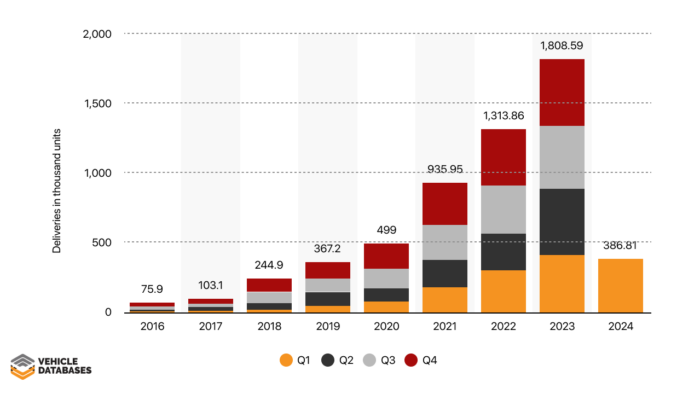
With the market accepting their pricing approaches, Tesla can now decide to change their prices at will. They can reduce them to increase demand and get more sales or increase prices to sort out supply problems. According to Musk, “Tesla prices must change frequently in order to match production with demand.”
Advantages of Tesla’s Dynamic Pricing
Market Adaptability
Tesla’s ability to adjust prices rapidly allows it to respond to changing market conditions. When demand is high, Tesla can increase prices to maximize revenue. Conversely, during slower periods, they can reduce prices to stimulate demand.
Supply and Demand Balance
Frequent price changes help Tesla align production with consumer demand. By adjusting prices based on real-time data, they avoid overproduction or shortages.
Competitive Edge
Tesla’s dynamic pricing sets it apart from traditional automakers. It demonstrates agility and innovation, attracting customers who appreciate the brand’s responsiveness.
Profit Optimization
Tesla can optimize profits by adjusting prices strategically. When demand exceeds supply, higher prices yield better margins. Conversely, lower average prices can attract more buyers.
Disadvantages and Risks
Consumer Uncertainty
Frequent price fluctuations can create uncertainty for potential buyers. Some consumers may hesitate to purchase if they fear prices will change shortly after their purchase.
Brand Perception
Traditional automakers often maintain consistent pricing, which can convey stability and reliability. Tesla’s dynamic pricing may be perceived as erratic by some consumers.
Transparency Challenges
While Tesla aims for transparency, understanding the rationale behind price changes can be complex. Consumers may wonder why prices shift so frequently.
Customer Loyalty Risk
Constant price adjustments could impact customer loyalty. Buyers who feel they paid more than others for the same product might become dissatisfied.
In summary, Tesla’s pricing approach offers flexibility and responsiveness but also presents challenges related to consumer perception and transparency. As the automotive industry evolves, Tesla’s approach will continue to shape market dynamics.
How Do Car Buyers React to Tesla’s Pricing?
When Tesla lowers prices after a purchase, many buyers feel an immediate sense of loss. Even if the vehicle performs exactly as promised, the perceived value often drops in the owner’s mind, and that reaction tends to linger.
At the same time, shoppers who closely follow Tesla’s pricing patterns may hesitate to buy at all. As prices move up and down, some buyers delay their decision, hoping another price cut is just around the corner. Tesla appears aware of this behavior and seems willing to tolerate that friction in exchange for greater pricing flexibility.
In the end, pricing influences more than just monthly payments. It shapes buyer expectations, confidence, and timing. In many ways, Tesla is continuously testing how pricing changes affect consumer behavior in real time.
Tesla Resale Value and the Used Market Reality
Let’s talk about Tesla resale value, because this is where pricing decisions ripple outward.
When Tesla lowers new car prices, used prices follow. Buyers compare used Teslas to current new prices, not to what someone paid last year.
This is exactly how Tesla pricing affects used car market trends. Depreciation can accelerate after major price cuts. That hurts some owners. It helps buyers entering the used market.
Over time, this creates a more fluid used EV market. Not everyone loves that outcome, but it is a direct result of pricing transparency.
So What Should Buyers Actually Do?
Trying to perfectly time Tesla pricing is exhausting. Prices move. They will keep moving.
Understanding the system matters more than chasing the lowest number. Transparency replaces negotiation. Flexibility replaces predictability.
That trade-off defines modern Tesla ownership.
READ ALSO: Car Market Value Calculator | Instant Used Car Values for Online Car Dealerships
Get EV Specifications Data Through an API
If you are building tools, listings, or analytics around electric vehicles, access to accurate specs matters. Businesses can use our Electric vehicle specifications API to pull detailed data like battery capacity, range, drivetrain, charging details, trim-level differences, and more.
With an API like ours, you can improve accuracy, reduce manual work, and scale faster across markets.
Get a free account with free trial credits & test our APIs easily!
Final Thoughts
Tesla pricing can feel unsettling, even unfair at times. But it isn’t random. It’s a system built around control, data, and speed.
For buyers, understanding that system removes some of the anxiety. For competitors, it raises the bar. And for the industry, it suggests that fixed pricing may not survive the EV transition.
If nothing else, Tesla has made one thing clear. Price is no longer a static number. It’s part of the product.
Frequently Asked Questions About Tesla Pricing Strategy
How often does Tesla change its prices, and why?
Tesla changes prices multiple times per year based on demand, inventory levels, production costs, and competition.
What is Tesla's direct-to-consumer sales model, and how does it affect pricing?
The direct-to-consumer sales model used by Tesla enables the company to sell its vehicles directly to customers without needing independent dealerships. Tesla establishes a single sales price, which it updates immediately everywhere because it manages all aspects of distribution.
Tesla pricing changes occur faster than those at traditional automakers because dealer markups and negotiations and delivery times no longer exist.
How do Tesla's price cuts impact the value of used Teslas?
Tesla’s price cuts impact the value of used Teslas by narrowing the price gap between new and pre-owned vehicles. When new prices drop, used prices usually follow. This can reduce resale value for current owners, but it also makes used Teslas more accessible to buyers entering the market.
Where can I get historical data on Tesla's MSRP changes?
You can get historical data on Tesla’s MSRP changes through automotive data platforms, pricing archives, and long-term market analysis tools. The automotive industry websites maintain records of price changes, which enable users to track Tesla’s pricing developments between various vehicle models and across different years.
How do traditional dealerships compete with Tesla's pricing transparency?
Traditional dealerships compete with Tesla’s pricing transparency by offering customers incentives, rebates, trade-in offers, and financing options instead of directly adjusting their manufacturer’s suggested retail prices.
Local dealerships can use this system to provide customers better services, although it makes price evaluations harder for customers.
What role do software and options play in Tesla's pricing strategy?
Software allows Tesla to lower upfront prices while generating revenue after purchase through upgrades and subscriptions.
How does Tesla's pricing differ by region or country?
Tesla sets their prices differently for each region and country based on the available local monetary incentives, existing market competition, expenses of transporting their products, and the specific governmental regulations that apply to that area.
For example, pricing in the United States often aligns with tax credit rules, while pricing in China responds more quickly to competitive pressure from local EV brands.
What are the main criticisms of Tesla's pricing approach?
The main criticisms of Tesla’s pricing approach include buyer uncertainty, faster depreciation, margin pressure, and brand confusion. Frequent price changes can frustrate owners who bought earlier and make it harder for buyers to feel confident about timing a purchase.
How do Tesla's manufacturing costs influence its pricing decisions?
Tesla’s manufacturing costs influence its pricing decisions by giving the company more flexibility. Tesla achieves reduced costs through vertical integration, simplified vehicle designs, and its ability to produce vehicles in large quantities, which enables the company to decrease prices without harming its profit margins.
Can other EV manufacturers replicate Tesla's pricing strategy?
Most electric vehicle manufacturers cannot implement Tesla’s pricing system because they depend on dealership networks, their production costs exceed Tesla’s, and they do not have significant revenue streams that originate from their software operations.
Some brands are experimenting with direct sales, but matching Tesla’s flexibility remains difficult.