
The Affordable KBB API Alternative for Businesses
Looking for vehicle valuation data for your platform? Skip the limitations of the Kelley Blue Book API and retrieve market values instantly by VIN or year, make, and model. Our API delivers fast, structured pricing data that’s easy to integrate into your platform.
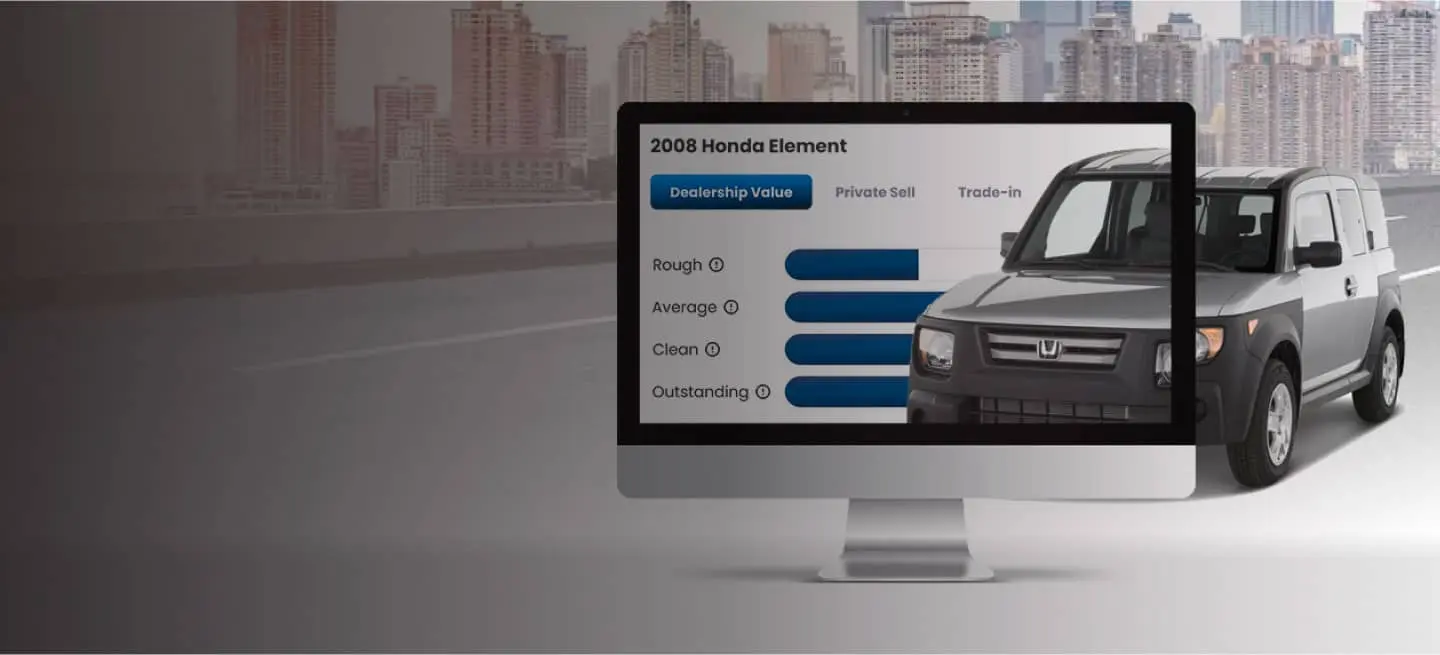
Get Reliable Vehicle Market Data with the Vehicle Databases API!
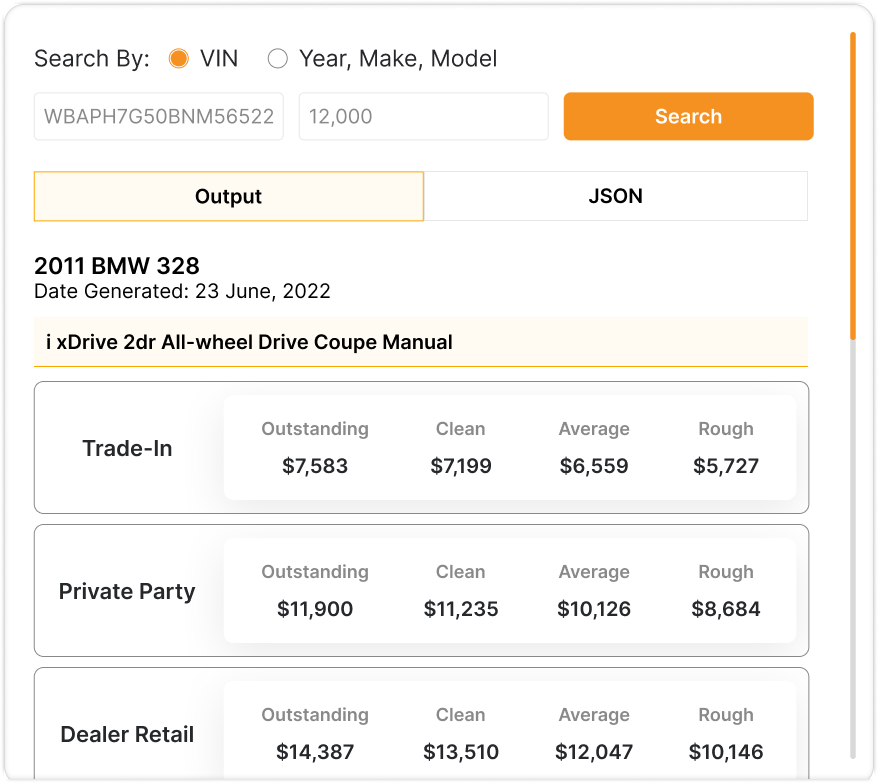
With the global used car market valued at $1.66 trillion and continuing to grow, access to accurate, instant vehicle market values has never been more important.
While Kelley Blue Book has long been a trusted pricing source, its API can come with limitations such as restricted access and delayed updates.
Vehicle Databases offers a practical alternative, providing reliable and up-to-date vehicle valuation data through a flexible car value API built for dealerships and all automotive businesses.
What Is the Kelley Blue Book API?
The KBB API refers to developer access that allows platforms to retrieve vehicle pricing estimates from the Kelley Blue Book valuation database.
Kelley Blue Book has built its reputation by collecting market data from vehicle sales, dealer listings, and industry trends. This information is then used to estimate the value of vehicles across different types of transactions.
Their pricing data typically includes:
- Trade-in values
- Private party values
- Dealer retail prices
Many automotive platforms integrate valuation APIs so they can automate vehicle pricing tools directly within their applications.
However, it’s essential to note that KBB is just one player in the market with its limitations, and KBB API alternatives and providers like Vehicle Databases offer a compelling choice.
Available Kelley Blue Book APIs
Kelley Blue Book provides limited API solutions that allow approved partners to access their valuation datasets.
While the details are not always publicly documented, these primary API-based solutions are typically referenced:
InfoDriver Web Service 4.0
This is an updated API in the pilot phase, offering access to vehicle info, values, and content. Tailored for select customers, it provides comprehensive data on vehicle specifications and market values. The Kelly blue book info driver API allows KBB to offer vehicle service, editorial service, and Powersports service.
The vehicle service provides information about car years, manufacturers, and models, covering essential details for both new and used cars. It also provides validated configurations, alerts, and valuations based on factors like the vehicle’s ID, mileage, and zip code.
The Advertising Data API
The Advertising Data API, distinctively, gives insights into automotive advertising and marketing trends. Delivering metrics on campaigns, market reach, and audience engagement, it aids businesses in refining their advertising strategies within the automotive industry.
The KBB Market Value API gives businesses and developers access to reliable car pricing data, making it easier to build useful tools and help customers make smarter decisions when buying or selling a vehicle.
Limitations of the Kelley Blue Book API
Many developers searching for Kelley Blue Book API access quickly encounter several limitations, including:
Limited Developer Access
KBB APIs are often only available through partnerships with approved businesses.
Independent developers and smaller companies may not qualify for direct access.
Complex Licensing Agreements
Access may require enterprise agreements that include strict usage guidelines and licensing terms.
Pricing Transparency
The cost of integrating the KBB API is not always publicly available, which can make budgeting difficult for companies planning new platforms.
Data Integration Restrictions
Certain licensing agreements limit how KBB data can be displayed or redistributed inside applications.
Because of these restrictions, many automotive platforms begin exploring a Kelley Blue Book alternative that offers easier integration and more flexible developer access. That’s where Vehicle Databases steps in!
Introducing a Better Kelley Blue Book API Alternative - Vehicle Databases API
Vehicle Databases provides a modern car valuation API designed for developers and automotive businesses. Instead of navigating complex licensing agreements, developers can integrate the API immediately and begin retrieving vehicle pricing insights within seconds.
For businesses that do not want to build integrations, the platform also allows users to run VIN or year, make, model lookups directly from the dashboard and retrieve valuation data instantly.
The API is used by:
Automotive marketplaces
Dealerships
Insurance companies
Automotive software platforms
Developers building pricing tools, and all automotive businesses.
Ease of integration
The API follows simple REST architecture and returns data in structured JSON format.
Flexible pricing
Reliable infrastructure
Fast response times and stable uptime make the API suitable for production-level automotive applications.
Dashboard access without integration
Users can retrieve vehicle valuation data directly from the Vehicle Databases dashboard. This allows anyone to run lookups instantly without building an API integration.
Kelley Blue Book API vs Our Vehicle Valuation API
Below is a comparison between the Kelley Blue book API and the Vehicle Databases valuation API.
| Aspect | Kelley Blue Book API | Vehicle Databases Market Value API |
|---|---|---|
| Data Coverage | Kelley Blue Book only provides values for used vehicles up to 21 years old. | Vehicle Databases provides values for used vehicles starting from the 1999 models and later. |
| API Accuracy | Values provided may not always reflect real-time market changes due to delayed pricing updates. | Provides up-to-date market values by frequently analyzing used cars and dealer sales across North America. |
| Market Value Types | Include trade-in value and private-party value. | [Not specified in original, but implied comprehensive] |
| Integration and Accessibility | Integration with KBB API requires adherence to their terms and conditions, and the KBB API access may vary based on the developer's agreement. | Vehicle Databases offers easy integration with an API accessible to developers, businesses, and individuals with transparent terms. |
| Market Value Calculation | Does not compute market values at the city level. | Compute market values at both state and city levels using mileage and location parameters. |
| Pricing | KBB API pricing can be complex and may vary depending on licensing agreements. | Vehicle Databases offers transparent and affordable pricing plans suitable for businesses of all sizes. |
Vehicle Valuation Data Returned by the API
When a lookup request is submitted, the car valuation API returns data that identifies the vehicle and provides its estimated market value across multiple pricing categories.
Here’s what our KBB API alternative shows:
Basic Vehicle Information
The API returns core details about the vehicle configuration.
Returned fields include:
- VIN
- Year
- Make
- Model
- Trim
- State
- Mileage
These fields help confirm that the valuation data corresponds to the correct vehicle configuration.
Market Value Estimates
The API returns valuation estimates based on vehicle condition.
Returned fields include:
- Condition
- Trade-In Value
- Private Party Value
- Dealer Retail Value
Each condition level is evaluated separately to provide pricing estimates across different transaction scenarios.
Example JSON Snippet
					{
    "status": "success",
    "data": {
        "basic": {
            "make": "Tesla",
            "model": "Model 3",
            "year": "2022",
            "state": "NY",
            "mileage": "12000"
        },
        "market_value": {
            "market_value_data": [
                {
                    "trim": "Base 4dr Rear-wheel Drive Sedan Automatic",
                    "market_value": [
                        {
                            "condition": "Outstanding",
                            "Trade-In": "$26,984",
                            "Private Party": "$29,941",
                            "Dealer Retail": "$33,285"
                        },
                        {
                            "condition": "Clean",
                            "Trade-In": "$26,601",
                            "Private Party": "$29,478",
                            "Dealer Retail": "$32,728"
                        },
                        {
                            "condition": "Average",
                            "Trade-In": "$25,963",
                            "Private Party": "$28,705",
                            "Dealer Retail": "$31,798"
                        }
                    ]
                }
            ]
        }
    }
}
How Different Businesses Use Vehicle Valuation APIs
Valuation APIs can significantly improve operational efficiency across the automotive industry. Businesses that automate vehicle pricing tools often experience measurable improvements.
Examples include:
- Reducing manual appraisal time by 80 percent
- Generating price estimates in under one second
- Improving transparency for buyers
- Increasing listing conversions on marketplaces
Below are some of the most common industries that rely on vehicle valuation APIs:
Used Car Marketplaces
Marketplaces automatically display estimated prices alongside vehicle listings.
Dealership Groups
Dealers use APIs to evaluate trade-ins faster and price vehicles more accurately.
Automotive SaaS Platforms
Software companies build vehicle pricing tools powered by valuation data.
Insurance Companies
Insurers estimate replacement values for vehicles using market data.
Fleet Operators
Fleet managers track depreciation and asset value over time.
Vehicle Financing Platforms
Lenders calculate loan-to-value ratios using automated vehicle pricing data.
Factors Considered in Calculating Vehicle Market Values
Determining a vehicle’s market value is not based on a single data point. Accurate pricing requires analyzing several factors that influence how a vehicle performs in the real automotive marketplace.
What are these factors?
Below are the key factors typically considered when calculating vehicle market values.
The Year
The year of manufacture strongly influences market value. Newer vehicles typically command higher prices due to improved technology and safety features.
Make and Model
Different brands and models have unique reputations in the automotive market. These differences affect demand and pricing.
Style and Trim Level
The trim level determines the features and equipment included in a vehicle. Higher trims often carry higher resale values.
Color
While color preferences vary, some colors may increase resale demand depending on market trends.
Mileage
Mileage is one of the most significant factors in determining vehicle value. Lower mileage typically indicates less wear.
Condition
Mechanical and cosmetic condition can significantly affect resale pricing.
Geographic Location
Regional supply and demand also affect vehicle values. For example, truck prices may vary between urban and rural markets.
The Vehicle Databases’ valuation engine evaluates all these factors to produce accurate and up-to-date market pricing estimates.
For businesses seeking a reliable Kelley Blue Book API alternative, this approach ensures pricing decisions are based on real automotive market data.
Case Study: Enhancing Transparency and Boosting Car Sales with Vehicle Databases API
Introduction
Findusedonline, a prominent classified site for buying and selling used cars, faced a common challenge: accurately assessing the value of pre-owned vehicles.
To address this, they integrated the Vehicle Databases market value API into their website. This case study highlights how this integration transformed their platform and benefited both buyers and sellers.


Objectives
Enhance Transparency: Findusedonline aimed to provide transparent and accurate vehicle valuations to users.
Empower Sellers: By offering precise market values, the platform wanted to help sellers set fair prices for their cars.
Empower Buyers: Buyers needed a tool to compare different car values and make informed purchase decisions.
Approach
API Integration: Findusedonline seamlessly integrated the Vehicle Databases API into their website.
Instant Valuations: Users can now obtain market values for specific makes, models, and years instantly.
User-Friendly Interface: The API results were displayed in an intuitive format, making it easy for users to understand.
Implementation
Valuation Tool: Users could input a VIN or select a car’s details (make, model, year) to view up-to-date Trade-in, Dealer Retail, and Private Party values.
Mobile Compatibility: The valuation tool was accessible on both desktop and mobile devices.
Challenges
Data Accuracy: Ensuring accurate data from the API was crucial. Regular updates were necessary.
User Adoption: Convincing users to trust the new valuation tool required effective communication.
The Final Results
After a month of API Integration, the following results were observed:
Increased Car Sales: Daily car sales on average surged from 15 to 35 (up by 57%) after API integration.
Tripled Sign-Ups: Sign-ups skyrocketed from 100 before integration to 250 per month on average (60% increase).
Improved User Satisfaction: Buyers and sellers appreciated the transparency and ease of use. The customer support team reported zero complaints from users (car buyers) about car prices. This was previously standing at 6 per day on average.
Remark
By utilizing the Vehicle Databases market value API, Findusedonline transformed its platform, empowered users, and became a trusted hub for used car transactions. The success story demonstrates the impact of accurate valuations on both business growth and customer satisfaction.
Other Automotive APIs You May Need
Many automotive platforms combine multiple datasets to build complete vehicle intelligence tools. In addition to valuation data, you may also consider integrating:
Retrieve detailed vehicle specifications instantly using a VIN
Access accident records, title history, ownership data, and other important vehicle background information.
Retrieve past auction listings, sale records, and vehicle auction activity.
Analyze previous vehicle sale transactions to understand pricing trends and resale performance.
Check manufacturer recall records and safety notices linked to a specific vehicle.
Retrieve OEM maintenance schedules and recommended service intervals for specific vehicles.
What Our Customers Say About Us
Businesses across the automotive industry rely on Vehicle Databases to power their vehicle data tools. From dealerships to automotive software platforms, customers value the reliability, speed, and flexibility our APIs provide.
Here’s what they say about us:


Start Retrieving Vehicle Market Values Today!
Get accurate vehicle valuation data instantly by VIN or year, make, and model. Integrate the API into your platform or retrieve values directly from the dashboard in seconds. If you need bulk access, the full dataset is also available through our downloadable automotive databases.
Frequently Asked Questions About KBB APIs
Is there an official Kelley Blue Book API for developers?
What are the best alternatives to the KBB API for getting car values?
One of the best alternatives to the KBB API is Vehicle Databases’ market value API because it provides accessible integration, transparent pricing, and reliable vehicle valuation data.
How does Vehicle Databases valuation data compare to KBB's?
Vehicle Databases provides comparable pricing estimates using real market sales data while also offering additional flexibility for developers and businesses.
What data sources do you use for pricing and how often is it updated?
Vehicle Databases has millions of vehicle records in its database covering dealer listings, vehicle sales records, and market trends across North America to maintain accurate valuation data.
What is the cost difference between your API and KBB's offering?
KBB pricing typically requires enterprise licensing agreements, while Vehicle Databases offers transparent pricing tiers that are accessible to individuals who want to use the platform directly or businesses of all sizes interested in integration.
Can I get trade-in, private party, and suggested retail values through your API?
How accurate is your data compared to KBB or NADA guides?
Vehicle Databases continuously analyzes vehicle sales data to maintain current market pricing estimates.
Do you offer a free trial or developer sandbox to test the data?
Yes. Developers can test the API through a free trial before integrating it into production systems.
How do I integrate your car valuation API into my dealership website or app?
Integration typically requires sending VIN or YMM requests to the API endpoint and processing the JSON response within your application. If you need assistance with integration, please contact us or send a message via live chat.
Can your API provide valuations for classic, exotic, or commercial vehicles?
Yes, the API supports a wide range of vehicle types, including used vehicles from 1991 and newer models.