
The Only Classic VIN Decoder API for Pre-1981 Vehicles!
Decode classic VINs instantly with our classic car VIN decoder API. Get accurate specs, engine details, and build data for pre-1981 vehicles in seconds. Built for all automotive businesses that rely on precise classic vehicle data.
Want to see how it works? Try ClassicDecoder and get 20% off your classic car VIN lookup. Enter any VIN and access detailed vehicle data in seconds.
What Makes the Classic VIN Decoder API Easy to Work With
The Classic VIN Decoder API one focuses on what actually matters when you are working with pre-1981 vehicle data. Some features of the classic car VIN decoder API are:

99.9% Uptime SLA
Reliable infrastructure built for platforms running continuous classic vehicle lookups.

High Decoding Accuracy
Matches VINs accurately to the correct year, make, model, and configuration.

Fast Response Times
Get decoded specs in seconds, ready to use without delays in your workflow.

Structured JSON Output
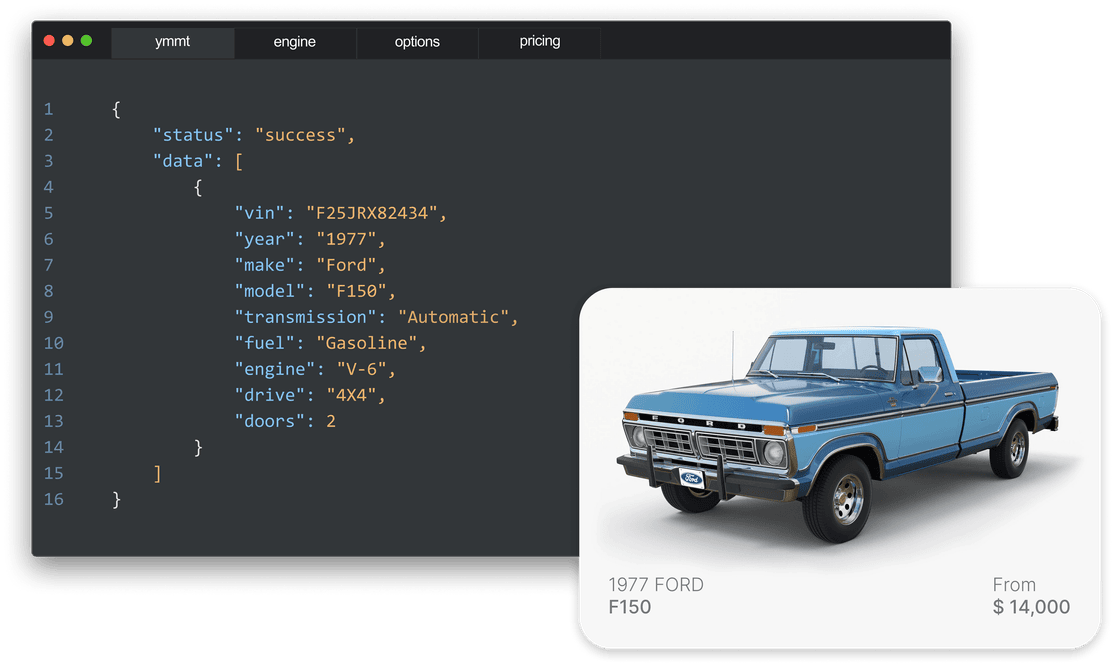
Consistent JSON with year, make, model, engine, transmission, fuel, drive type, and door count in every response.

5 to 14 Digit VIN Support
The only vintage VIN decoder API built to handle pre-1981 VIN formats across all lengths.

Reliable Developer Support
Get the help you need with responsive support when it matters.
What Is a Classic Car VIN Decoder API?
A Classic Car VIN lookup API is designed to decode VINs that don’t follow today’s standardized 17-digit format. Older vehicles used shorter, inconsistent VIN structures. That makes them harder to decode using regular tools.
This API solves that. We are the only ones offering a Classic VIN Decoder API that can help you effortlessly handle decoding for VINs ranging from 5 to 14 digits.
Access key details from a classic VIN number, such as the year, make, model, transmission type, fuel usage, engine specifications, and more, all of which are essential for your business needs.
What the Classic Car VIN Decoder API Returns
Each response from the API for classic cars includes the following fields:
Vehicle Identification
- VIN
- Year
- Make
- Model
Engine & Powertrain
- Engine type
- Fuel type
- Make
- Model
Vehicle Configuration
- Number of doors
- Trim-level indicators (when available)
Try the Classic Car VIN Decoder API Instantly
Want to see it live? Pick any pre-1981 vehicle and enter the VIN below. The decoder returns the original factory specs for that exact vehicle in seconds for free.
Check it out!
How the Classic Car VIN Decoder API Works
The process is simple and takes just a few steps. Here’s how the API works from request to response:

Step 1: Submit the Classic VIN
Pass any VIN between 5 and 14 characters to the endpoint using a standard GET request.

Step 2: We Match Against Pre-1981 Manufacturer Records
The system identifies the manufacturer and decodes the VIN, returning the correct factory specifications for that exact vehicle.

Step 3: Receive Structured Vehicle Data Instantly
Your response arrives as a clean JSON data structure with year, make, model, engine, transmission, fuel type, drive configuration, and door count.
No Code Needed to Start Decoding Classic VINs
Not ready to integrate just yet? You can still start decoding classic VINs right away from your Vehicle Databases dashboard. Enter any classic VIN, and the factory specs come back instantly. No developer, no setup, and no integration required on day one.
Connect it to your platform whenever you are ready.
Example Classic VIN Decoder API Response
					Here’s what a response looks like:
{
  "vin": "F25JRX82434",
  "year": "1977",
  "make": "Ford",
  "model": "F150",
  "transmission": "Automatic",
  "fuel": "Gasoline",
  "engine": "V-6",
  "drive": "4X4",
  "doors": 2
}
The Classic Car Market by the Numbers
The classic car industry is not a niche hobby. It is a multi-billion dollar market growing at nearly 9% a year, and accurate vehicle data sits at the center of almost every transaction in it.
Annual US market growth rate through 2032
Auctions going digital
Online auctions outpaced live auctions by $34 million in 2024, with volume up another 6% in 2025. Accurate vehicle data is behind every one of those transactions.
Younger buyers entering the market
Buyers under 40 are the fastest-growing segment in the classic car market, and most research and buy entirely online. If you can’t decode classic VINs, you lose this audience at the first lookup.
Real Problems the Classic Car VIN Decoder API Solves
Classic car platforms lose users the moment a VIN lookup fails. Here is what that looks like across different workflows and how the API addresses it:
Classic Car Dealerships and Private Seller Platforms
Listings Without Verified Factory Specs
Auction Houses and Bidding Platforms
Misrepresented Vehicles Going to Auction
Problem:Bidders cannot confirm the engine, drivetrain, or configuration from the listing alone.
Solution: Decode the VIN automatically before the vehicle goes live so every bidder sees the verified factory specs.
Restoration Shops and Parts Suppliers
Wrong Parts Ordered for the Wrong Configuration
Problem: A V8 and a V6 version of the same model need completely different components. Sellers that guess get returns.
Solution: Use the vintage VIN decoder API to confirm the exact factory engine and drivetrain before surfacing parts results.
Classic Car Insurance Providers
Inaccurate Vehicle Classification
Solution:The pre-1981 VIN API returns the original factory configuration instantly, giving insurers accurate data to classify and value the vehicle correctly.
Collector and Authentication Platforms
No Programmatic Way to Verify Matching Numbers
Vehicle History and Research Tools
Platform Stops at 1981
Problem: Buyers researching muscle cars, European classics, or vintage trucks hit a dead end.
Solution: Add the classic car VIN history endpoint to extend coverage to every pre-1981 vehicle in the database.
Classic Car VIN Decoder API vs. Standard VIN Decoders
Standard VIN decoders are built for 17-digit post-1980 VINs. They reject anything shorter and have no logic for classic car VIN formats. That makes them useless for any vehicle built before 1981.
| Feature | Standard VIN Decoders | Vehicle Databases Classic VIN API |
|---|---|---|
| Accepts 5 to 14 digit VINs | No | Yes |
| Pre-1981 vehicle coverage | No | Yes, all US makes |
| Manufacturer-specific formats | No | Yes |
| Engine and drivetrain data | Limited | Yes |
| Structured JSON output | Yes | Yes |
| Built for API integration | Yes | Yes |
Standard decoders work for modern vehicles. They do not work for a 1965 Mustang, a 1970 Chevelle, a 13-digit VIN decoder request, or any other pre-standardization vehicle. This API is built specifically for that gap.
Used in Real Workflows: ClassicDecoder.com
Classic Decoder is one of the leading platforms for classic car VIN decoding and history reports. Their apps and website run on the Vehicle Databases classic car VIN decoder API as the data layer behind every decode.
The results after switching to our API are:
Lookup times vs. manual cross-referencing
40% more
Successful decodes vs. their previous decoder
60+ makes
Added that previously returned no results
98%
Of users get a full spec response on first attempt
“Carfax and AutoCheck don’t work on classic cars. Classic Decoder was built specifically for older vehicles with short VIN numbers, and Vehicle Databases powers the factory data behind every decode.”
The same vintage VIN decoder API that powers Classic Decoder is available to any platform building for the classic car market.
APIs That Work Well With the Classic VIN Decoder API
If you are building something larger, this API works even better with others. The top picks are:
Decode any 17-digit VIN to year, make, model, trim, and engine instantly.
Past auction results and realized sale prices across major lanes.
OEM-recommended service schedules by year, make, and model. Use it alongside repair pricing to show users what service is due and what it should cost.
Full technical specs by year, make, model, and trim.
OEM recreated window stickers, including factory MSRP and installed options.
Need something more specific? We offer custom automotive data solutions designed for your platform, including unique datasets and fully customized API integrations.
What People Say After Using the API in Production
From collector platforms to auction houses and every auto business, teams use our APIs because they work reliably and fit into real workflows. Here is what they have to say about us:


Your First Classic VIN Decode Is One Request Away!
FAQs About the Classic Car VIN Decoder API
Is there a VIN decoder specifically for classic and antique cars?
Yes. The Vehicle Databases classic car VIN decoder API is built specifically for all classic and vintage vehicles. It accepts VINs from 5 to 14 digits and decodes them accurately, even when standard VIN decoders cannot read them. All major US classic makes and models are covered.
How do I decode a VIN from the 1960s or 1970s?
Submit the VIN to the classic car VIN lookup API endpoint via a GET request. The API accepts VINs from 5 to 14 characters and returns year, make, model, engine, transmission, fuel type, and drive configuration for vehicles built before 1981. You can also decode the VIN from the form on this page without integration and get a 20% discount.
Where can I find a build sheet or factory data for my classic car?
The API for classic car data from Vehicle Databases returns the original factory specifications decoded directly from the VIN. Engine type, drivetrain configuration, transmission type, and fuel type are all returned as recorded at the time of manufacture.
Do standard VIN decoders work on cars made before 1981?
No, most standard VIN decoders do not work on cars made before 1981 because they rely on the 17-digit VIN format introduced later.
What specific information can I get from a classic car VIN?
The classic VIN decoder API returns year, make, model, engine type, transmission, fuel type, drive configuration, and door count. These are the core factory specifications encoded in the original manufacturer VIN at the time of production.
How can a classic car dealership or auction house use a VIN API?
Dealerships and auction houses use the classic car VIN lookup API to automatically populate listings with verified factory specifications. They can sign up and use the API directly from the dashboard or choose to integrate it into their systems.
In practice, it’s simple:
- Send the VIN (5–14 digits) to the API
- Retrieve decoded data like year, make, model, engine, and drivetrain
- Display the results on listings or internal systems
Is there an API that includes data for muscle cars, European classics, or trucks?
How accurate are online VIN decoders for very old vehicles?
Accuracy depends entirely on whether the decoder was built for classic VIN formats. General-purpose decoders that expect 17-digit VINs will misread or reject classic VINs entirely.
The vintage VIN decoder API decodes each VIN against the correct manufacturer pattern for that make and year, which is the only reliable way to handle these formats.
What's the best way to verify the authenticity of a classic car?
The best way to verify authenticity is by decoding the VIN, checking factory data, and comparing it with known manufacturer records. If the physical vehicle does not match what the VIN decodes to, that is a flag worth investigating.
Combine VIN decoding with a physical inspection of stamped numbers on the engine block, firewall, and frame against the decoded factory record for the most reliable verification.