If you have ever searched for a used car price online, there is a good chance NADA car values popped up somewhere near the top. Buyers use them. Sellers quote them. Dealers lean on them. Banks and lenders quietly depend on them.
But here is the thing. Most people use a NADA value without fully understanding what it actually represents, how it is calculated, or where it falls short. That gap in understanding can cost real money, especially when you are buying, selling, or trading a vehicle.
Let’s slow it down and walk through it together. We will break down what NADA car values are, how they work behind the scenes, how they compare to other pricing tools, and why modern vehicle history report providers are becoming a smarter option for everyday drivers and businesses alike.
Key Takeaways Before We Get Started
- NADA car values are dealer and lender focused, not personalized to your exact vehicle.
- Condition, history, and usage matter more than averages, and NADA cannot see those details.
- Vehicle history-based valuation tools explain why two identical cars can have very different prices.
What Are NADA Car Values?
At their core, the used car values NADA publishes are estimated prices used to determine how much a vehicle may be worth in the current market. While NADA does provide values for both new and used vehicles, its pricing is most commonly used and referenced in the used car market.
That is because NADA values play a major role in loan approvals, trade in discussions, and dealership pricing models, all of which are far more relevant once a vehicle has already been owned.
People search for NADA values for a few main reasons:
- They want to know what their car is worth before selling or trading it.
- They want to check if a dealer’s price feels fair.
- They are applying for financing and want to understand lender expectations.
- They want a quick reference point without spending hours comparing listings.
Buyers, sellers, dealerships, lenders, and even insurance companies rely on these numbers in different ways. However, the way consumers use a NADA guide value often differs from how professionals use it, and that difference matters.
Why NADA Car Values Exist
NADA car values come from the National Automobile Dealers Association, often referred to through its pricing guide brand, NADAguides. Over time, these guides became a trusted pricing reference across the automotive industry.
The Role of NADA in the Auto Industry
Historically, NADA values were built for dealerships and lenders, not private sellers. That origin still shapes how the data works today. Many banks and credit unions rely on a NADA value when determining loan limits and risk.
Dealers also use NADA values internally to evaluate trade-ins and price inventory. That means the numbers often lean toward conservative, finance-friendly estimates rather than consumer-optimized prices.
Trade-In vs Retail Values
NADA usually publishes two core figures:
- Trade-in value, which reflects what a dealer might offer you for your car.
- Retail value, which reflects what a dealer might list the car for on the lot.
The gap between these numbers covers reconditioning, overhead, profit margins, and risk. Private party pricing is not always clearly represented.
Dealer-Focused Pricing
It is worth noting that NADA values assume standardized conditions and typical market behavior. Real life rarely follows averages perfectly, and that is where problems begin.
How NADA Car Values Are Calculated
NADA car values are built using large-scale market data. This includes wholesale transactions, dealership sales, auction results, and regional trends. On paper, that sounds comprehensive.
In practice, there are important limitations.
Market Data and Transactions
NADA relies on completed transactions rather than asking prices. This helps filter out inflated listings, but it also means the data can lag behind fast-moving markets.
Regional Pricing Adjustments
Prices are adjusted based on geography. A pickup truck in Texas may show a higher NADA car value than the same vehicle in a dense urban market. These adjustments help, but they remain broad.
Vehicle Condition Assumptions
This is a big one. NADA typically assumes a vehicle is in average or clean condition unless otherwise specified. That single assumption can swing a valuation by thousands of dollars.
Types of NADA Values Explained
Understanding the different value types helps you avoid using the wrong number at the wrong time. Here are the types of NADA values you should expect to see:
Trade-In Value
This is what a dealer might offer you as credit toward another purchase. It is usually the lowest value and often surprises first-time sellers.
Retail Value
This reflects dealership asking prices, not private party sales. It includes markup, preparation costs, and profit margins.
Clean vs Average Condition
Clean condition assumes minimal wear, no accidents, and solid maintenance. Average condition assumes visible wear and normal aging. Many vehicles fall somewhere between the two.
How Lenders and Dealers Use Each
Lenders tend to anchor loan approvals closer to trade in values, while dealers advertise closer to retail values. Consumers often get caught in the middle.
NADA vs. KBB vs. Edmunds: What’s the Difference?
NADA is not the only pricing guide available. Two other well-known tools are Kelley Blue Book and Edmunds.
Each guide focuses on different data sources, which explains why values rarely match exactly.
Guide | Best For | Pricing Bias |
NADA | Lenders and trade ins | Conservative |
KBB | Private sellers | Consumer friendly |
Edmunds | Dealer comparisons | Market based |
This is why many shoppers check more than one source before making decisions.
How to Use NADA Car Values When Buying, Selling, or Trading
Knowing a NADA number is one thing. Knowing how to use it properly is another. This is where a lot of buyers and sellers get tripped up. NADA car values are not wrong by default. They are just easy to misuse.
The key is understanding when a NADA value helps you and when it can quietly work against you.
Using NADA Values as a Seller
Sellers often use NADA as a pricing anchor. That can help, but only if expectations are realistic.
Setting realistic expectations
A NADA value reflects an average scenario, not your exact vehicle. Condition, mileage, and history can push real market value above or below the guide number.
Use NADA to understand the baseline. Do not assume it guarantees a sale price.
Avoiding underpricing mistakes
Many sellers see a low trade-in number and list too cheaply. Clean vehicles with good records often sell for more than NADA trade-in in private sales.
Cross-checking local listings helps avoid leaving money on the table.
Using NADA Values as a Buyer
For buyers, NADA is a quick way to sense-check pricing.
Spotting overpriced listings
If a vehicle is priced well above NADA retail, it deserves a closer look. Sometimes there is a reason. Sometimes there is not.
NADA helps you identify which listings are worth questioning.
Asking the right dealer questions
When pricing exceeds NADA, ask what supports the difference. Service records, warranty coverage, or rare options may justify it.
If the explanation is unclear, that affects negotiating power.
Using NADA Values for Trade-In Negotiations
This is where NADA has the most practical influence.
Timing your trade-in
Trade-in values shift with demand, inventory levels, and seasonality. Checking NADA close to your trade-in date matters more than using an old estimate.
Values can change faster than most people expect.
Separating vehicle price from trade value
Always negotiate the purchase price and trade-in value separately. Combining them makes it harder to see the real numbers.
NADA helps keep both sides of the deal transparent.
Cross With Local Market Prices
NADA should never be used in isolation.
Why local listings matter
Local listings reflect what buyers are paying right now. If similar vehicles consistently sell above or below NADA, the local market carries more weight.
This is especially important in high-demand regions.
Seasonal price shifts
Vehicle values rise and fall throughout the year. NADA updates regularly, but short-term seasonal swings can still create gaps.
Local pricing trends help fill those gaps.
Limitations of NADA Car Values
This is where most consumers get tripped up.
- NADA cannot see accident history.
- Title brands and mileage inconsistencies are not detected.
- Condition is assumed, not verified.
- Local demand spikes may not be reflected.
This is why relying only on NADA car values by VIN can still lead to pricing surprises.
A Better Alternative: Detailed Vehicle History Values
Modern valuation tools go beyond averages. Instead of guessing, they analyze real vehicle records tied to a VIN or license plate.
These tools factor in:
- Accidents and damage
- Title and ownership history
- Mileage patterns
- Service records
- Flood or structural damage
- Usage type, such as rental or fleet
This explains why two identical cars on paper can have very different values in reality.
Want to Check the NADA Value Instantly?
Fill out the form below to see how much information you can get with a NADA value check tool:
Why does your business need to provide NADA car values with a Market Value API?
Car valuations involve obtaining the accurate market value of a vehicle based on the car’s age, mileage, year, make, model, market trends, and overall vehicle condition. With access to this information, customers are usually more confident in their purchases or car services and negotiate better.
This not only makes the sales process easier, but it also builds trust and transparency, which leads to repeat customers. The best part about it all is that the car’s value can be checked easily with the VIN in just a few clicks.
Automotive businesses need accurate data to determine the true worth of vehicles, and with a market value API, they can easily get up-to-date market value information.
Here are some reasons why you should provide accurate NADA used car values by VIN number with the Vehicle Databases’ API:
- Informed Decision-Making: Accurate used car values by VIN allow businesses to make well-informed decisions. With instant access to the vehicle value of any vehicle, your business can check any car and find its true worth in seconds.
This knowledge is instrumental in pricing strategies, trade-ins, and inventory management.
- Customer Confidence: What about the customers? With access to the market value of vehicles, they are more likely to feel secure in their purchase decisions or when seeking car services. This confidence contributes to a positive customer experience and brings trust in your business.
- Negotiation Advantage: Knowing the fair market value and worth of a car gives your business a negotiation advantage. Customers, aware of the fair market value, are in a better position to negotiate, leading to smoother transactions.
This not only benefits the customer but also allows your business to establish fair pricing, creating a win-win situation.
- Accurate Mileage Verification: Spot mileage discrepancies and obtain accurate mileage information for Zero motorcycles, providing transparency and ensuring that you have a clear understanding of the bike’s usage history.
- Building Trust and Transparency: Accurate NADA valuations contribute to building trust and transparency with your customer base. When customers see that your business provides fair and precise car values, it creates a transparent environment.
Trust is a crucial element in the automotive industry, and it lays the foundation for long-term relationships, repeat customers, and positive word-of-mouth.
Now you understand why you need the market value API integrated into your business. Let’s now take a look at the Vehicle Databases market value API and all that it provides.
Vehicle Databases' Advanced Market Value API For Used Vehicle Businesses
This NADA car values API alternative is a game-changer, providing businesses in the automotive sector with instant and precise access to essential market value information. Here are some of the key features of the API:
Comprehensive Vehicle Valuations
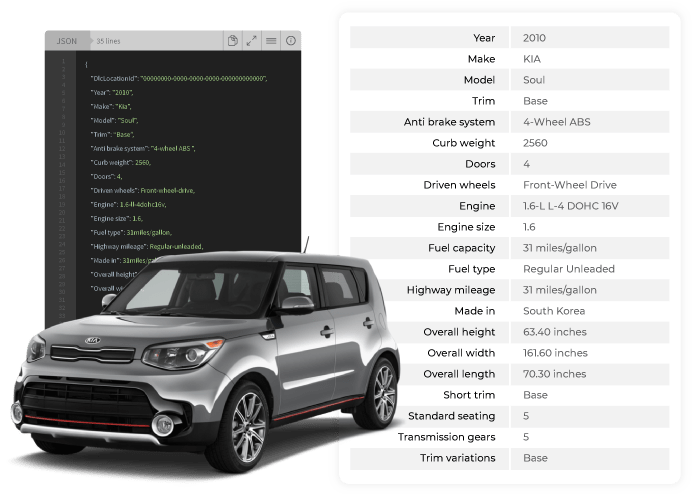
Our Market Value API offers a detailed approach to vehicle valuations, covering both used and new vehicles, and supports VINs from 1999 to the present day. We ensure that every single dent or scratch is taken into consideration when providing the estimated values, and detailed reports are generated.
Dealer Retail, Trade-In, and Private Party Values
The Market Value API provides a breakdown of values, including dealer retail, trade-in, and private party values. This detailed categorization allows businesses to provide a better business approach based on specific transaction types.
Check by VIN or Year-Make-Model-Trim
Whether you want your customers to search new or used vehicles by VIN or year, make, model, and trim details, our API caters to your preferences. This ensures that you and your customers can obtain accurate market values with ease using whatever information they have about the vehicles they are interested in.
Detailed Criteria for Accurate Valuations
Vehicle Databases’ NADA Car Value API considers a multitude of factors in its valuation process. From the year, make, model, trim, and colors to mileage and overall condition, our APIs are built with 100% accuracy in car valuations.
It also factors in conditions such as outstanding, clean, average, or poor. By considering the condition of the vehicles, the API can provide accurate values that align closely with the true worth of the vehicle.
Present the worth of every vehicle accurately with our API; Get accurate NADA used car values by VIN number with Vehicle Databases.
FindUsedOnline Optimized Their Car Classifieds!
FindUsedOnline is a car classifieds platform that uses our Market Value API to provide accurate dealer retail, trade-in, and private party values for used cars. This pricing transparency helps users quickly judge whether a listing is fairly priced and make more informed decisions.
By integrating the API, the platform improved valuation accuracy, simplified filtering by price and vehicle details, and delivered a smoother experience for buyers searching across a wide range of used car listings.
Conclusion on NADA Car Values
NADA car values are a helpful starting point for understanding vehicle pricing, trade-ins, and financing. They set expectations, but they rely on averages rather than the full details of an individual vehicle.
For greater accuracy, NADA values should be paired with vehicle history, condition data, and local market pricing. For businesses handling vehicle data at scale, market value APIs make it possible to apply this same logic automatically. Start with NADA, then confirm and enhance pricing decisions with real-world data.
Frequently Asked Questions About NADA Car Values
How can I look up the value of a car?
You can look up the value of a car by using the form on this page or visiting Detailed Vehicle History to compare pricing with vehicle history data and local market listings.
What is the most accurate car value site?
The most accurate car value site is one that combines market pricing with real vehicle history, since condition and usage affect value more than averages alone. Platforms like Detailed Vehicle History do this by factoring in accidents, mileage patterns, and ownership history alongside current market data.