

Windshield API - Identify the Exact Windshield by VIN
Retrieve accurate windshield data, including NAGS numbers, OEM references, feature indicators, and calibration requirements instantly with the Windshield API. Built for auto glass shops, insurers, dealerships, fleet operators, developers, and more
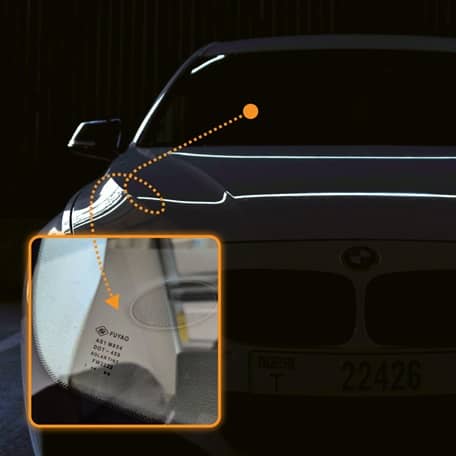
Why Choose Our Windshield API
This API is designed for real operational environments and not just basic lookups. It combines speed, accuracy, and structured output in a format built for production systems.

Fast & Reliable
<1 sec JSON responses with 99.99% uptime.

Accurate Vehicle Matching
Exact windshield records tied directly to a specific vehicle configuration.

Industry-Standard References
Includes NAGS numbers and OEM part numbers.

ADAS Awareness
Returns feature indicators and calibration requirements

Developer-Friendly
REST API with clear documentation and easy integration.

Production Ready
Built for live claims systems, service software, and parts platforms.
The Smarter Way to Match Windshields by VIN
The Windshield API by Vehicle Databases allows businesses to retrieve windshield records using a 17-character VIN or with the year, make, and model. Instead of manually browsing a static windshield database or relying on incomplete catalogs, your system receives structured data that includes:
Year
Model
NAGS part number
Feature indicators
Make
Windshield options
OEM numbers
Calibration requirements
Each windshield option is returned clearly, allowing your platform to identify compatibility without ambiguity. This structured approach ensures consistency across requests, even when handling thousands of VIN lookups daily.
How the Windshield API Works
The workflow is simple and built for automation. Here’s how it works:

Send either a 17-digit VIN or Year/Make/Model via a GET request.

Receive structured JSON containing windshield records tied to that vehicle.

Integrate the returned NAGS numbers, OEM references, features, and calibration data into your system.
For businesses that need to find windshields by VIN, this replaces manual interpretation with reliable automation.
Coverage & Technical Compatibility
The Windshield API is built specifically for North American vehicle markets and standardized VIN formats. Below is a quick overview of supported regions and compatibility.
Coverage
- Supports US and Canada vehicles
- Model years 1981 to present
- Covers passenger cars, SUVs, trucks, and light-duty vehicles
Support
- Works with all standard 17-digit VINs
- Year/Make/Model input supported
- Valid for vehicles based in the US and Canada region
- Returns structured windshield data instantly via API request
See the Windshield API in Action for Free!
You don’t have to imagine how it works. You can test it right here. Enter a VIN below and instantly retrieve structured windshield data, including NAGS numbers, OEM references, feature indicators, and calibration requirements.
What Data Does the Windshield API Return?
Every API request returns structured windshield records tied directly to the VIN you submit. The response is delivered in clean JSON, ready for ordering systems, claims platforms, or service software integration.
Everything You Receive in a Single API Call
Each request returns standardized windshield identification data designed to support matching, ordering, and installation workflows.
Below are the core data components included in every response.
Vehicle Identification
Each response includes:
- Year
- Make
- Model
This ensures windshield records are tied to the correct vehicle configuration.
NAGS Part Number Lookup
The API returns the NAGS number for each compatible windshield option.
This connects your digital workflow directly to the auto glass industry standard used by suppliers and repair networks.
OEM Numbers
OEM part numbers are included to support:
- Manufacturer cross-referencing
- Dealership ordering
- Insurance validation
- Internal procurement systems
This eliminates the need to maintain separate spreadsheets or manual catalogs.
Windshield Features
Modern windshields often include embedded technologies.
The API returns features such as:
- Rain Sensor
- Lane Departure
Feature visibility reduces ordering mistakes and prevents installation delays.
Calibration Requirements
Many vehicles require ADAS recalibration after windshield replacement. The API returns calibration indicators such as dynamic calibration.
This allows businesses to schedule correctly and avoid operational surprises.
Sample Windshield API Response
- VIN
- Year
- Make
- Model
- Nags Number
- OEM Numbers
- Features
- Calibrations
Windshield API vs Free and Manual Systems
Free lookup tools often provide limited information and are rarely built for sustained integration. Manual catalogs require human interpretation and increase the likelihood of error.
Here is a practical comparison:
| Feature | Our API | Free Sources | Manual Catalog |
|---|---|---|---|
| Accurate VIN Matching | Yes | Limited | Partial |
| NAGS Numbers | Yes | Limited | Yes |
| OEM References | Yes | Rare | Yes |
| Feature Indicators | Yes | × | Partial |
| Calibration Data | Yes | × | Rare |
| API Integration | Yes | × | × |
| Production Stability | Yes | × | × |
If you are building a structured Windshield Parts API workflow, this endpoint provides a reliable core. It can also function as a key component within a broader Automotive Glass API infrastructure, allowing platforms to scale beyond basic identification.
The Real Cost of Ordering the Wrong Windshield
Ordering the wrong windshield is not a small mistake. It creates delays, increases costs, and disrupts your entire repair workflow.
It can lead to:
- $150–$400 in return shipping and restocking fees
- 1–3 days of delayed vehicle delivery
- Technician downtime that may cost $50–$100 per hour
- Rescheduled ADAS calibration appointments
- Slower insurance claim approvals
- Frustrated customers who may not return
For high-volume shops, even a few incorrect orders per month can result in thousands of dollars in preventable losses. Getting the windshield right the first time protects your margins, your schedule, and your customer trust.
Built for Developers and Production Environments
The Windshield API is designed with integration in mind.
REST-based architecture
Structured JSON output
Predictable response schema
Stable uptime
Scalable request handling
Whether you are building a claims automation platform, dealership service tool, or procurement system, this API is engineered for reliability under load.
Documentation is structured clearly, allowing developers to integrate quickly without excessive overhead.
Who Benefits Most from the Windshield API?
Ordering the correct windshield is not optional for modern automotive businesses. Glass shops, insurers, dealerships, and technology platforms rely on structured windshield data to prevent delays and control costs.
Here are the industries that benefit most:
- 1
Auto Glass Shops
Auto glass installers work under time pressure. Ordering the wrong windshield means delays, returns, and rescheduled calibrations.
Benefits for Auto Glass Shops
With accurate windshield matching, shops can:
- Confirm compatibility before ordering
- Identify sensor-equipped glass instantly
- Prepare for required calibrations
- Reduce reorders and shipping waste
- Improve customer turnaround times
It ensures every replacement aligns with factory standards.
- 2
Insurance & Claims Platforms
Insurance workflows depend on documentation and validation. Incorrect glass selection creates disputes and slows claim approvals.
Benefits for Insurance Providers
This API helps insurers:
- Validate correct windshield selection
- Confirm feature and calibration requirements
- Standardize claim verification processes
- Reduce friction between shops and adjusters
- Improve claims accuracy
Structured glass data supports faster, cleaner claim resolution.
- 3
Dealership Service Departments
Dealerships require factory-level precision. Customers expect original equipment compatibility.
Benefits for Dealership Service Teams
With structured windshield records, service departments can:
- Match windshields to exact vehicle configurations
- Cross-reference OEM part numbers
- Maintain manufacturer consistency
- Support warranty-compliant replacements
- Improve service accuracy
Structured glass data supports faster, cleaner claim resolution.
- 4
Automotive Software Platforms
Platforms building ordering systems, claims tools, or service applications need reliable data infrastructure.
Benefits for Automotive Technology Providers
By integrating windshield identification into a broader Auto Glass API strategy, platforms can:
- Automate glass matching
- Reduce manual data entry
- Deliver structured outputs to end users
- Scale across multiple markets
- Build stable production systems
Reliable data becomes part of the product experience.
- 5
Fleet & Rental Companies
Fleet operators manage volume. Small errors multiply quickly across locations.
Benefits for Fleet Operators
This API helps fleets:
- Standardize replacement procedures
- Reduce downtime caused by incorrect orders
- Plan calibration requirements in advance
- Maintain consistent repair quality
- Control replacement costs
Consistency becomes easier when identification is accurate from the start.
- 6
Parts Distributors & Procurement Systems
Fleet operators manage volume. Small errors multiply quickly across locations.
Benefits for Glass Suppliers
The API allows them to:
- Align NAGS numbers with inventory
- Cross-reference OEM part numbers
- Reduce miscommunication with repair shops
- Improve fulfillment accuracy
- Minimize return rates
Clear identification improves supply chain performance.
Strengthen Your Automotive Platform with Additional APIs
Windshield identification becomes even more powerful when combined with other APIs. Some of the best picks are:
Decode a VIN instantly to confirm the full vehicle configuration before selecting the correct windshield.
Access accident, damage, and title records to support repair validation and insurance workflows
Extract VINs or license plates from images to automate glass identification and reduce manual entry.
Convert a license plate into a vehicle record when a VIN is unavailable.
Retrieve vehicle valuation data to support claim estimates and repair cost decisions.
View past auction listings and sale records for deeper vehicle background insight.
If your workflow requires custom endpoints or expanded glass coverage, or you need an entirely different API, you can contact our team to discuss customized solutions.
Get in touch
Have more questions?
Send in a query
Book a demo to connect directly with our team and explore how we can best serve your needs.
Trusted by Thousands of Automotive Businesses
Automotive platforms, service networks, insurance technology providers, and other businesses rely on Vehicle Databases APIs daily. Here’s what they say about us:
They have one of the best APIs; it's smooth and works flawlessly. I've never had an issue with them. Their customer support is also top-notch...

Saad Khan
PK
Rated 5 out of 5View Saad's testimonialUsing vehicle databases for our vin decoding for my mobile app . I wish get factory informations on each vehicles without selecting from...

Jamal Ramanou
US
Rated 5 out of 5View Jamal's testimonialThe support is top-notch. I don't think I have ever worked with a company that has ever reached out to me repeatedly to just check on...

Gearshift Solutions
US
Rated 5 out of 5View Gearshift's testimonial
Get Started with the Windshield API
Test the Windshield API with free trial credits and see accurate glass data by VIN instantly. Need bulk access? Explore our downloadable vehicle datasets for large-scale integration, offline systems, and enterprise workflows.
Start building with accurate windshield data today.
FAQ About the Windshield API
How do I find a windshield by VIN?
You can find a windshield by VIN by submitting the VIN to the API endpoint. The API returns structured windshield records, including NAGS numbers, OEM references, features, and calibration requirements.
Does the API include calibration requirements?elopers?
Yes, the API includes calibration indicators when available, helping businesses prepare for ADAS procedures after windshield replacement.
Is this a replacement for a windshield database?
Yes, this API functions as a structured, programmatic windshield database that eliminates manual lookup processes.
Can this integrate with insurance or dealership software?
Yes, the REST-based architecture and JSON responses make it suitable for integration with claims systems, service software, and ordering platforms.
Is this part of a broader Automotive Glass API?
This endpoint focuses on windshield identification but can serve as a foundational layer within a larger Automotive Glass API or Windshield Parts API ecosystem.