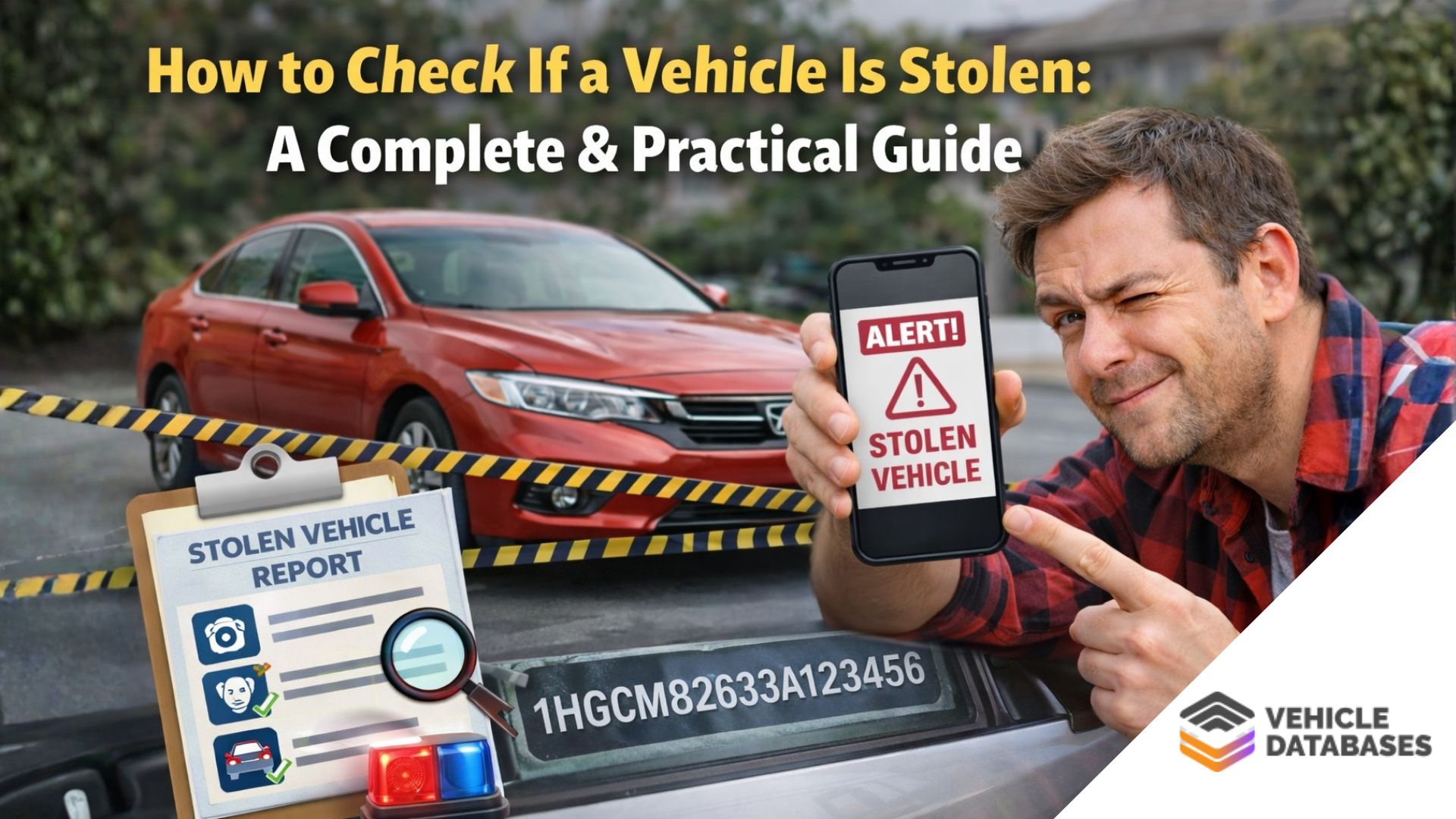
Shopping for a used car should be a smooth, exciting moment. Yet there’s a hidden risk many buyers overlook. Stolen vehicles don’t always look suspicious. In fact, a stolen car can blend right in with the rest. It might have clean paperwork, matching plates, and a seller who doesn’t raise a single red flag.
The reality is that hundreds of thousands of stolen vehicles are recorded every year in the United States. Some find their way into online listings or quiet driveway sales, where unsuspecting buyers walk straight into trouble. A stolen-vehicle check helps prevent that. It takes only a little effort and can save you from losing both the car and your money.
Let’s break down how to check if a vehicle is stolen so you can shop with real confidence instead of crossing your fingers.
Key Takeaways
- Always verify the VIN on the vehicle and the documents because even one mismatch can signal tampering.
- Use official databases like NICB, NMVTIS, or Detailed Vehicle History to quickly check whether a vehicle has been reported stolen.
- Trust your instincts during inspections; rushed sales, missing documents, or an unusually low price are common red flags.
Why Is It Important to Check if a Vehicle Is Stolen?
Even if a used car looks great on the surface, there’s a lot that can be hiding underneath, and one of the biggest risks is buying something that was never the seller’s to sell in the first place. That’s why it helps to understand what’s really at stake before you move forward.
Some reasons why you should check if a vehicle is stolen are:
Losing the Car Means Losing Your Money
You know what really stings? Finding out the car you just bought isn’t yours to keep. If police identify a vehicle as stolen, it can be taken right away. No back and forth. No negotiation. And in most cases, there’s no refund waiting for you.
The car simply goes back to the rightful owner or the insurance company that covered the theft. You’re left without a vehicle and without the money you paid. It’s a heavy hit, especially when all you wanted was a good deal.
Unexpected Legal Stress No One Wants
Here’s the thing. Even if you were completely innocent in the whole situation, a stolen vehicle instantly drags you into a stressful process. Authorities may ask you where you got the car, who sold it to you, and what checks you did before buying it.
It’s not about blaming you, but they still need answers. And walking through that process can be uncomfortable, especially when you thought everything was legitimate.
Hidden Damage and Mechanical Problems
A lot of stolen vehicles are treated harshly. Some are joyridden. Others are stripped for parts and quickly patched back together. A few even have their VIN swapped or their bodywork repainted to disguise their past.
All of this may leave behind issues that aren’t obvious at first glance. Maybe the suspension feels loose. Maybe the electrical system behaves oddly. Maybe the paint doesn’t quite match in certain lighting. These little clues can turn into big bills later.
Protecting Yourself From Stressful Surprises
Here’s the thing. Verifying a vehicle’s status is quick, and it protects you more than most people realize. A fast VIN check and a careful look at the paperwork can keep you from stepping into a very expensive problem. A little caution now saves a lot of trouble later.
READ ALSO: Best Free VIN Check Sites for Car Buyers and Sellers (2025)
How to Check If a Vehicle Is Stolen
Let’s break down the entire process. It is easier than it sounds, and once you understand the flow, it becomes second nature.
1. Locate and Inspect the VIN Carefully
Every vehicle has a unique identifier known as the Vehicle Identification Number, or VIN. Think of it like the car’s fingerprint. It should be the same everywhere it appears. A single character out of place is your clue that something is not right.
Here is where you will usually find the VIN:
- On the dashboard near the windshield
- Inside the driver’s door jamb
- On the engine block
- On the vehicle’s frame or firewall
- On the title, insurance papers, and registration
Your first job is to compare the VIN in all these places. They must match exactly. If you notice a VIN plate that looks newer than the surrounding area, or if you see scratches near the rivets, uneven paint, bent edges, or anything that feels off, take it seriously. VIN tampering is a common trick used by thieves.
A real VIN plate usually looks clean and undisturbed. No sanding marks. No strange glue. No weird fonts. Take your time with this step. It is one of the simplest ways to catch problems before they escalate.
2. Run the VIN Through Trusted Databases
After confirming the VIN is consistent, you should run it through official systems. These databases help reveal whether the car was reported stolen or has a suspicious history. Each one offers a different kind of insight.
NICB VINCheck (Free)
The National Insurance Crime Bureau provides a free tool called VINCheck. It shows whether a vehicle is recorded as stolen or has a salvage record. It is quick and should always be part of your routine.
NMVTIS (National Motor Vehicle Title Information System)
NMVTIS keeps track of title information and brand history. If the title looks unusual, moved between states too quickly, or carries odd labels, NMVTIS often shows it. It is one of the most reliable systems for this type of information.
Comprehensive VIN History Tools
For a deeper look, some buyers use full vehicle history reports from reputable providers. For example, tools like Detailed Vehicle History may offer broader data that includes past ownership, auction events, mileage records, and theft-related updates. These reports are optional but useful when you need context that free tools cannot always provide.
The goal here is simple. You gather information from multiple places so you can understand the full story. One database helps, but several together provide a clearer picture.
3. Perform a Physical Inspection of the Vehicle
Even if the paperwork checks out, your eyes are still one of the best tools you have. A physical inspection can reveal signs that a database might not catch right away.
Look out for:
- Mismatched paint
- Scratches or marks near VIN plates or bolts
- Replaced ignition
- Forced locks
- Loose interior panels
- Unusual wiring
- Temporary tags that do not fit the seller’s story
Take a moment to think about mileage too. If the car shows low miles but the pedals, steering wheel, and seats look heavily worn, something is not adding up.
4. Review the Vehicle’s Paperwork Carefully
It is tempting to flip through the papers quickly, especially when the seller seems friendly. But paperwork reveals a lot.
Check the title closely
Look for:
- Correct VIN
- Correct owner name
- Matching seller ID
- Accurate branding (no odd stamps or missing labels)
The title should look consistent with what your state typically issues. If it looks blurry, photocopied, or freshly printed, pause and ask questions.
Check the seller’s information
Ask for a valid ID. Compare names and addresses across documents. A legitimate seller will not object.
Ask about missing documents
If the seller claims they lost the title or never registered the car, take a breath and slow down. Missing paperwork often signals deeper issues.
5. Recognize the Red Flags
Sometimes, your instincts know something is off before you do. And that matters.
Common red flags include:
- The price is far too low
- The seller is rushing the sale
- They avoid showing ID
- The VIN does not match the documents
- The story changes each time
- The car has no maintenance records
If the situation feels uncomfortable, stepping away is the safest choice.
READ ALSO: How to Use the Police Stolen Vehicle Database: Best Guide
What To Do If You Suspect the Vehicle Is Stolen
Maybe you noticed something strange. Or maybe the vehicle history tool you used showed a warning. Whatever the case, here is what you should do next:
1. Stop the purchase immediately
If you’re still in the middle of the deal, pause everything. Do not send another payment, do not sign any additional paperwork, and definitely do not drive the car home. The longer you wait, the harder it becomes to unwind the situation. A simple pause gives you time to think clearly and figure out your next move.
2. Contact local law enforcement
Reach out to the police department in your area and share the VIN, the seller’s contact details, and any documents you received. They have access to official theft databases and can confirm the vehicle’s status.
This step is not about getting anyone in trouble. It is about getting a factual answer from the one place that can verify things properly.
3. Notify your insurance provider
If you already insured the vehicle or even started the process, let your insurer know what is happening. Insurance companies deal with these situations all the time, and they can guide you through the administrative side so you are not left guessing. Keeping them informed also protects you if the situation escalates.
4. Cooperate fully with the investigation
If the vehicle turns out to be stolen, the police may ask more questions. It can feel uncomfortable, but remember that honest buyers are almost always treated as victims, not suspects.
Share the texts, emails, screenshots, or meeting locations. The more clear information you provide, the faster they can close the loop.
5. Prepare yourself emotionally and financially
This part is tough to accept, but if the vehicle is officially confirmed stolen, it will be taken back. It usually goes to the rightful owner or the insurance company that paid out the original claim.
You may not get your money back, and that shock can linger for a while. It still matters to acknowledge that catching the issue early prevents an even bigger financial loss or legal mess down the line.
READ ALSO: Best Vehicle History Report in 2025: Top Services Reviewed
Simple Checklist for Verifying if a Vehicle Is Stolen
Use this anytime you inspect a vehicle.
VIN Verification
- VIN matches in all locations
- VIN matches the documents
- Plates look original
Database Checks
- NICB check completed
- NMVTIS check completed
- Full history report from Detailed Vehicle History
Document Review
- Title is clean
- Seller’s name matches their ID
- No suspicious edits
Vehicle Condition
- No forced locks or damaged ignition
- Interior wear matches expected mileage
- The seller is not rushing the sale
Using this simple checklist each time you inspect a used car makes the whole process of figuring out how to check if a vehicle is stolen feel a lot less intimidating.
Vehicles That Are More Likely To Be Stolen
Not all vehicles attract thieves equally. Some are targeted more due to high resale value, easy parts swapping, or weak security systems.
Common patterns include:
- Older cars with simple locks
- Popular sedans
- Work trucks
- High-demand models
- Cars heavily used for rideshare services
This doesn’t mean these models are unsafe. It just means you should do your checks thoroughly.
For Businesses That Need Automated Stolen-Vehicle Checks
In fast-moving auto environments such as dealerships, rental fleets, and online marketplaces, every VIN you process matters. You need tools that scale, systems that run quietly in the background, and the confidence that you’re not selling, renting, or financing a vehicle with a theft history.
Our Stolen Vehicle API does just that:
- Accepts any 17-character VIN and checks global theft/theft-recovery records instantly.
- Designed for bulk checks so you can screen hundreds or thousands of vehicles without manual effort.
- Helps reduce fraud risk, avoid legal exposure, and protect your business reputation.
If you’re supplying vehicles, listing them online, or underwriting loans, this kind of automatic check is worth integrating.
Conclusion on How to Check If a Vehicle Is Stolen
Checking whether a vehicle is stolen may sound complicated at first, but once you learn the steps, it becomes surprisingly simple. Start with the VIN. Inspect the vehicle. Run it through trusted databases. Review the paperwork slowly and thoughtfully. When something feels off, trust that feeling.
A few minutes of careful checking can save you from a long and expensive problem. And with a clear process in your hands, you can shop for a used car with confidence rather than worry.
FAQs About How to Check if a Vehicle is Stolen
Can I check to see if a vehicle is stolen?
Yes. Start by confirming the VIN on the vehicle matches the paperwork, then run that VIN through trusted databases like Detailed Vehicle History. These systems show if a car has been reported stolen or carries a suspicious title history.
How do you check if the car is stolen or not?
To check if a car is stolen or not, you compare the VIN across all locations, check it in official databases, look closely at the title and seller’s ID, and do a quick physical inspection. If anything feels off, even slightly, pause and investigate before buying.
Is there a public stolen vehicle database?
NICB VINCheck is the closest option available to the public. It won’t show every detail, but it’s the easiest way to confirm whether a car has been reported stolen in the United States.